



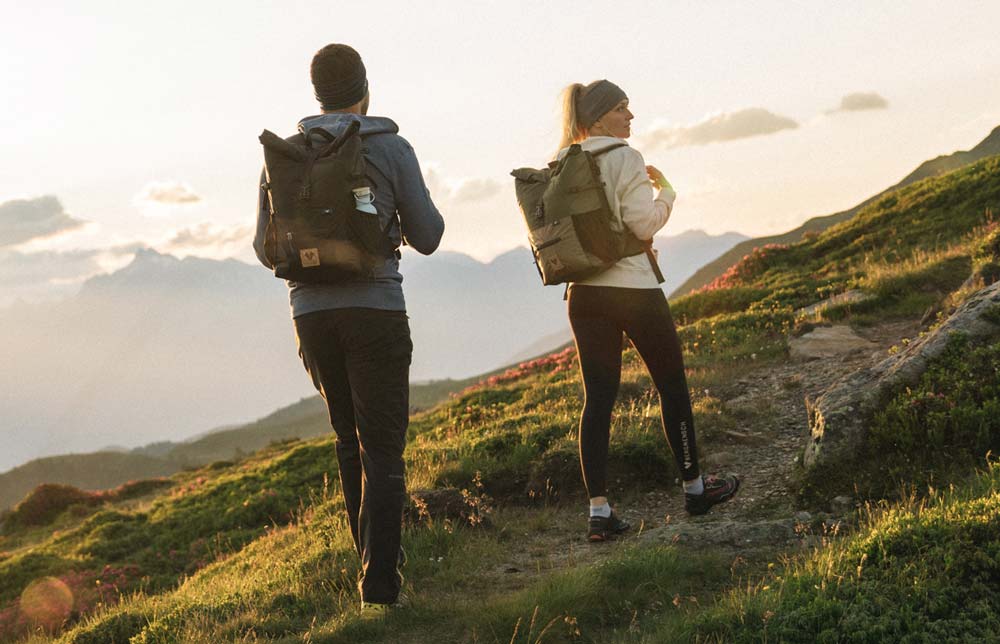


Sometimes a small backpack is enough for a day hike. But which is the right hiking backpack for a day trip? The selection is huge, and it's not so easy to find the right model. We'll look at what really matters so you don't end up with an uncomfortable or too small backpack. Who wants to be out and about with aching shoulders or a backpack from which everything falls out? Here you'll find everything you need to know.

Unser Top Pick für die Wandertour!
Jetzt shoppen
The right size for your hiking backpack for a day trip
The size of your hiking backpack is crucial for how comfortably you travel in nature and whether you have everything important with you. For a day trip, a backpack with a volume between 20 and 30 liters is usually just right.
That might not sound like much at first, but remember that even on a sunny day, an additional warm layer and rain protection should be taken along. You also need space for enough water and, of course, provisions.
A backpack that is too big tempts you to pack unnecessarily much. The extra weight quickly becomes noticeable and can make the tour more strenuous than necessary. So it's advisable not to choose the size based solely on the motto "more is more."
Volume for day trips
For a normal day trip, where you're not out in winter or covering extremely long distances, 20 to 30 liters is usually sufficient. This fits everything you need for a day in the mountains or forest: first-aid kit, rain jacket, something to eat and drink, perhaps an extra hat or gloves if it gets colder. A small camera or binoculars can also find a place here.
Also interesting: The packing list for a hut tour
Differences between day and multi-day backpacks
The main difference lies in the volume and thus the capacity. Here are the most important differences at a glance:
Daypack
- Volume: 20–30 liters
- Compact and lightweight
- For tours within one day
- Simple carrying system
- Space for provisions, water & rain protection
- Ideal for hikes, walks, short trips
Multi-day backpack
- Volume: 50 liters and more
- Larger and more stable
- For multi-day tours & trekking
- Sophisticated carrying system for heavy loads
- Space for sleeping bag, clothes & cooking utensils
- Ideal for hut-to-hut tours & trekking trips
A multi-day backpack is designed to carry heavier loads over longer periods and usually features a more sophisticated carrying system to maximize comfort.
Choosing the right size is about finding a balance. Enough space for the essentials, but not so much that unnecessary weight is carried along.
Important features of a hiking backpack

Carrying system and anatomical fit
The carrying system is the heart of every hiking backpack. It ensures that the weight is well distributed and the backpack sits comfortably even on longer tours.
A well-thought-out system transfers the load to the hips, relieving the shoulders. Pay attention to padded shoulder straps and a well-fitting hip belt that carries the weight. Daypacks often have simpler systems, sometimes a waist belt is sufficient. If you quickly get shoulder pain, a model with a full-fledged hip belt is advisable.
A contact back sits close to the body and shifts the center of gravity backwards. This is good for balance, but can also lead to more sweating. Many models have breathable mesh covers or ventilation channels to counteract this.
Ventilation and comfort
In addition to the carrying system, ventilation also plays a role, especially on warm days. A well-ventilated back panel prevents you from sweating too much on your back. This can be achieved through mesh backs or special ventilation channels. Comfort is also influenced by the padding of the shoulder straps and hip belt. A backpack should feel like a second skin, without pinching or rubbing.
Additional functions and pockets
The equipment of a backpack can vary greatly. Practical features include additional pockets on the hip belt for small items like snacks or your phone. A helmet holder can be useful for mountain bikers or climbers. Many backpacks offer compartments for hydration bladders with tube routing.
Attachment options for trekking poles or a sleeping pad are also often available. An integrated rain cover protects the contents during sudden showers; alternatively, a separate cover can be used. Make sure that the compartments and holders fit your equipment.
The choice of the right backpack depends heavily on the type of tour planned. A lightweight backpack with simple features is often sufficient for day trips, while a more robust model with a better carrying system is necessary for longer hikes with more luggage.
What belongs in a hiking backpack for a day trip?
For a day trip, it is important to be well prepared to be both safe and comfortable on the go. This means that the backpack should contain the right equipment for various weather conditions and any small emergencies. A first-aid kit is essential.
Necessary equipment for safety and comfort
It should not only contain plasters for blisters and small wounds, but also bandages, disinfectant, and tweezers for splinters. Those who regularly take medication should also keep it handy. The mobile phone or smartphone not only serves for communication but can also be used as a navigation aid or for emergency calls.
Also think about protection from rain and sun. A light rain jacket and headwear are often worth their weight in gold, even if the forecast is good. Sunscreen and sunglasses protect against UV radiation, especially at higher altitudes.
Food and hydration
Sufficient provisions and liquids are crucial for energy during a hike. For a day trip, sandwiches, fruit, and vegetables are usually enough as snacks. It is important that these are well packed and not crushed. A water bottle with at least one liter capacity per person is a must.
Alternatively, a hydration bladder can also be used, which is often easier to handle. It is advisable to always take a little more water than you think you need, especially in warm weather or on strenuous tours. Also remember a small bag for your waste to keep nature clean.
Additional useful items
In addition to the basic things, there are some additional items that can make a day trip more pleasant and safer. An emergency blanket is small and light, but can be life-saving in an emergency. A headlamp is practical if the tour takes longer than planned and you are on the go in the dark.
A small pocket knife can be useful for various purposes, from opening packaging to small repairs. Those who wear glasses should take spare glasses or the necessary accessories for contact lenses with them.
Also consider spare batteries for important devices such as a hearing aid. Maps and a compass have often been replaced by smartphones, but are still a good idea as a backup in case of poor reception or a dead battery. Small but fine helpers such as a lighter or a small first-aid kit for blisters can make all the difference.
Packing your hiking backpack correctly for a day trip
For backpacks that only have one large main compartment, a well-thought-out packing method is particularly important.
Strategies for backpacks with one main compartment
The goal is to keep the backpack's center of gravity close to your body. Heavy items like a full water bottle or binoculars therefore belong directly against your back. Lighter items that you need less often, such as an extra layer of clothing, can be placed further out. This prevents the backpack from pulling backwards and makes carrying more comfortable.
Optimal placement of equipment
The correct placement of equipment significantly influences carrying comfort and stability. Heavy equipment, such as cooking utensils or a full provision bag, should be placed as close as possible to the upper back.
This helps to distribute the weight evenly and relieve the back. Lighter and bulkier items, such as a sleeping mat or a tent, can be stored further down or on the sides. Things you need more often on the go, such as a rain jacket or a map, belong at the top or in easily accessible outer pockets.
Accessibility of important items
Quick access to certain pieces of equipment can be crucial on a hike. The first-aid kit, sunscreen, a hiking map, and your phone should always be within reach. These items are best placed in the lid compartment or in the side pockets of the backpack. This way, you don't have to open the entire backpack to get to these important utensils. Snacks for in between or a water bottle should also be easily accessible to maintain your energy without unnecessarily interrupting the tour.
Good packing organization saves time and nerves. Consider beforehand which items you will probably need during the tour and which you probably won't. This will help you pack your backpack efficiently and avoid unnecessary searching.
-
Heavy items close to the back: stove, full water bottles, heavy food. Placement in the upper back area.
-
Medium-weight items on the outside: clothing, tent tarp. Placement around the heavy items.
-
Light and bulky items at the bottom: sleeping bag, sleeping mat. Placement in the bottom compartment.
-
Quickly accessible at the top/outside: first-aid kit, map, snacks, rain jacket, phone. Placement in the lid compartment or side pockets.
Models and recommendations for your hiking backpack
When choosing the right daypack, it is worth looking at current tests. Models are often praised for their robustness, carrying comfort, and well-thought-out layout.
Sustainable options and used backpacks
Many backpacks are still in top condition even after repeated use and fulfill their purpose perfectly. When buying a used backpack, you should pay attention to the condition of the zippers, seams, and carrying system. Minor signs of wear are often not a problem, but major damage can impair functionality.
When buying new, there are also more and more manufacturers who focus on environmentally friendly materials and fair production conditions.
Waterproof models are also worth considering if you often travel in changeable weather. They offer additional protection for the equipment, even without an additional rain cover.
Conclusion: Your backpack, your tour
So, at the end of the day, it's really like this: the perfect hiking backpack for your day trip is the one that feels right for you. Remember what you're planning – are you just going for a quick walk around the block or rather to a challenging summit? The volume should fit, not too much and not too little. And make sure it sits comfortably, otherwise even the most beautiful tour won't be fun.
Feel free to try on a few models, pay attention to the padding and whether it sits well on your back. A good backpack is like a good friend on tour – it helps you to have everything important with you without burdening you. So, pack your backpack and enjoy nature!








Share:
3-Day Hut-to-Hut Hike for Beginners – Your Introduction to Mountain Adventures
Merino vs. Synthetics: Why Your Hiking Shirt Never Has to Smell Again