





Are you considering your first multi-day mountain trek? A 3-day hut-to-hut tour for beginners is perfectly suited for this. It's long enough to truly immerse yourself in nature, but not so long that it becomes too much.
Imagine this: You hike through amazing landscapes during the day, and in the evening, you relax comfortably in a hut. Sounds good, right? But before you set off, there are a few things to consider. From route selection to the right equipment – we'll help you find your way into mountain adventures.

Unser Top Pick für die Wandertour!
Jetzt shoppen
Choosing the Right Tour for Beginners
Your first hut-to-hut tour should be a success. That's why choosing the right route is crucial.
For beginners, tours with short daily stages are suitable. Around 10 to 15 kilometers per day is a good guideline. The elevation gain also plays a role.
500 to 800 meters of ascent are manageable for most beginners. A three-day tour is often ideal. It's long enough to get into a rhythm, but not so long that it overwhelms you.
It's important to be honest about your own fitness level. Regular physical activity in everyday life is a good basis. Those accustomed to hiking with a backpack have an advantage.
The ability to walk uphill for several hours is also important. Pay attention to the trail conditions. Well-marked trails without technical difficulties are best. Difficulty levels T1 to T2 on the SAC scale are well-suited for beginners.
A good beginner's tour is characterized by manageable stages and well-maintained trails. This leaves time to enjoy nature and get used to hut life.
It's not about breaking records, but about finding joy in mountain hiking. Flexibility is also a plus. Routes with multiple huts offer options if a stage becomes too strenuous.
When planning, the time of year should also be considered. Late June to early October is usually the best time. Outside this period, huts may be closed or there may still be snow. September is often a good choice. The weather is usually stable, and there are fewer people.
Evenings in the huts are often the most beautiful. Eating together, sharing stories, and the calm before the next day – that's the charm of a hut-to-hut tour.
Best Season and Weather Conditions
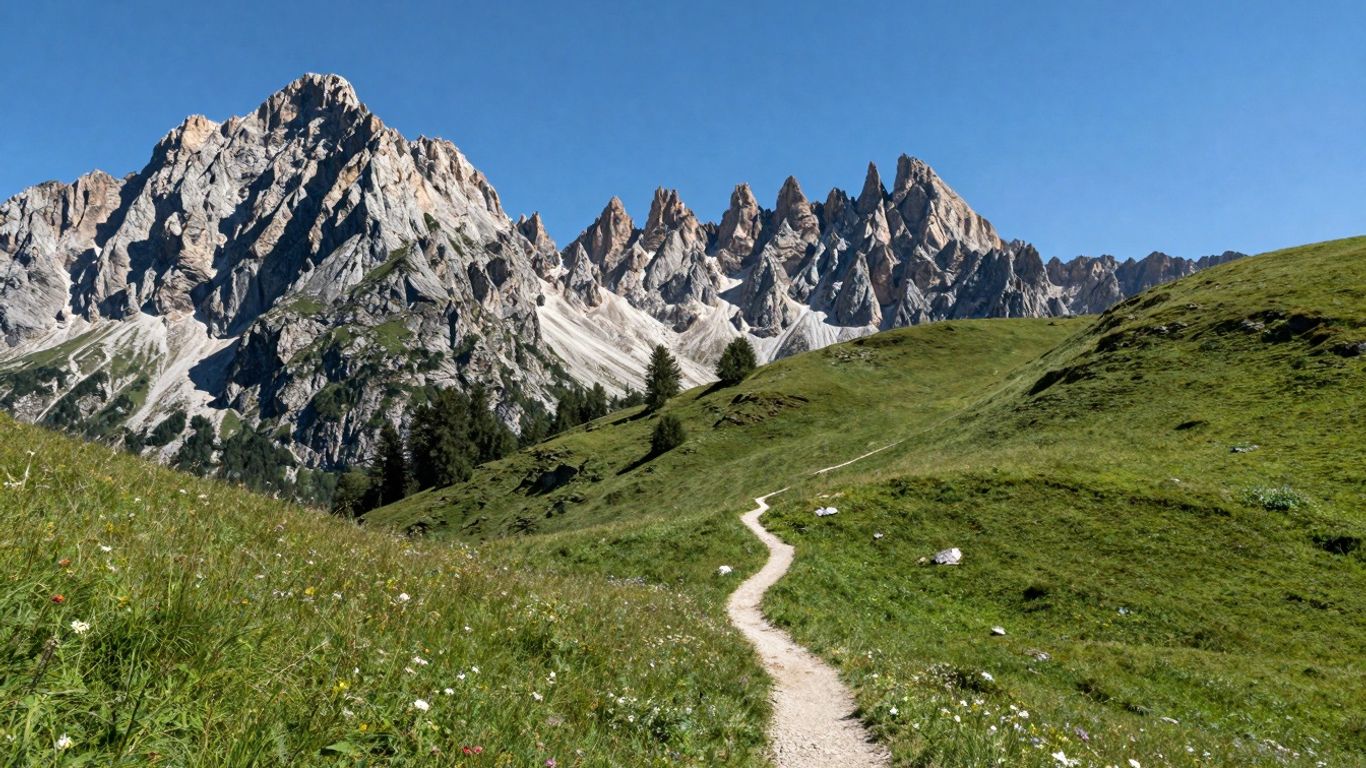
The best time for a hut-to-hut tour in the Alps is generally from late June to early October. During this period, most huts are open, and the trails are usually snow-free. Mid-summer, meaning July and August, is also the most popular time. However, this also means it gets busier. Reservations are almost mandatory then.
If you prefer it a bit quieter, September is often a good choice. The weather can still be stable, and the large tourist crowds have thinned out. This makes September an ideal time for beginners.
In early summer, i.e., June, there can still be snowfields at higher altitudes. Also, trail markers can sometimes be damaged or less visible at the beginning of the season. That's something to watch out for.
Outside the main season, i.e., in May or until late October, tours at lower altitudes are perfectly manageable. However, if your tour leads into the high mountains, it quickly becomes challenging at these times. Without special equipment like crampons and ice axes, and without the necessary experience in using them, it is no longer simple hiking.
Mountain weather can change quickly. Even in summer, hail or thunderstorms can occur. Fog can severely limit visibility. It's important to be prepared for changing conditions. The weather is not just scenery, but an active part of the adventure. It determines how far and how fast you can progress.
The mountains are not unfriendly if you can't get further there. Often, it's because body and mind are not prepared for the demands. Safe hiking begins long before the first step. The real work happens weeks or months beforehand, through steady effort that builds endurance and strength.
Route Planning and Hut Reservations
Planning your first multi-day hike with overnight stays in huts is an important step. It ensures that you are safe
and well-prepared. Good route planning considers not only the distance but also the elevation gain and the estimated walking times.
It is advisable to stick to stages of about 10 to 15 kilometers per day, with an elevation gain of 500 to 800 meters. This is manageable for beginners and allows room for breaks and unexpected delays.
For planning itself, there are various tools. Classic hiking maps are still a good choice, but digital maps and apps like Outdooractive or Komoot can also be very useful. They often show the difficulty levels of the trails and allow for a better assessment of the steepness. It is important not to calculate planned times too tightly. Always plan buffer times. Mountain weather can change quickly, and your own fitness is not always constant. A too tight schedule can quickly lead to stress.
When reserving huts, it is advisable to act early, especially if the tour falls within the main season, i.e., July and August. Popular huts are often fully booked weeks or even months in advance. Many huts offer online booking systems. It is also good to know that not all huts accept card payments. Therefore, always carry enough cash for accommodation and food. Membership in an Alpine Club can be worthwhile, as members often receive discounts on overnight stays and food.
Here's a small checklist for planning:
-
Maps: Get detailed maps of the region (e.g., Alpine Club maps).
-
Set route: Plan daily stages considering distance, elevation gain, and walking time.
-
Select huts: Find out about the huts along the route and their facilities.
-
Reserve: Book hut accommodations in good time, especially during peak season.
-
Emergency contacts: Write down important phone numbers (mountain rescue, hut wardens).
When planning, it is helpful not to rely solely on the pure walking time. Factors such as terrain, your own pace, and the need for breaks play a major role. It is better to plan half an hour longer and arrive relaxed than to run out of time.
Fitness and Preparation
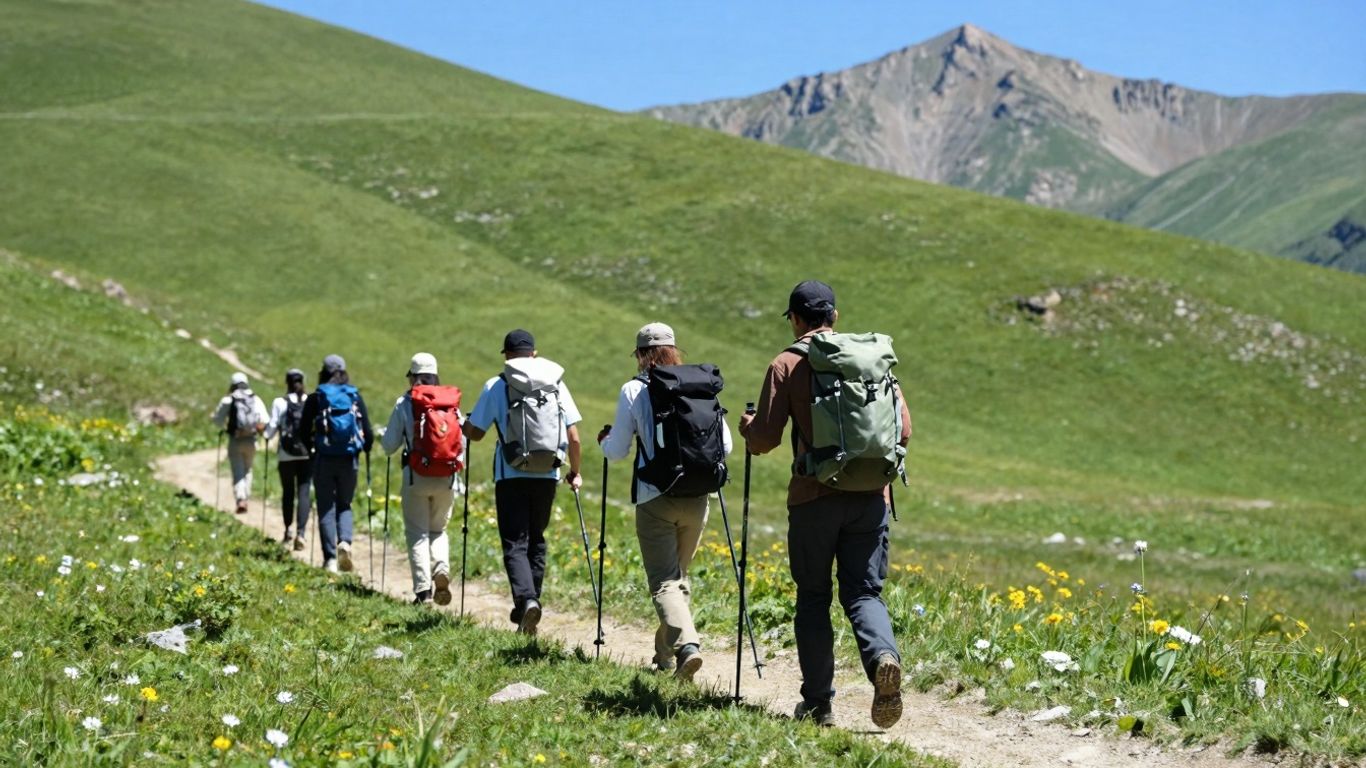
Before embarking on your first hut-to-hut tour, good preparation is essential. It's about slowly acclimating your body to the exertion and ensuring you can enjoy the tour. Regular exercise in everyday life is a good start.
Begin with regular day hikes, preferably with a backpack that already contains some weight. This way, you learn how the extra weight affects your body, especially on descents, which can put a lot of strain on knees and ankles. Other endurance sports like cycling or regularly climbing stairs also help build basic fitness. Make sure to get enough sleep and drink enough – this is often more important than you might think.
It's advisable to realistically assess the planned stages. Use maps or hiking apps to determine elevation changes and estimated walking times. Plan a bit more time than you think you'll need. Breaks are important to recharge and enjoy the scenery. Mountain weather can change quickly, so flexibility in route selection is an advantage. Choose tours where it's possible to shorten a stage or descend earlier if necessary.
A good packing list for the hut tour helps avoid unnecessary weight. The goal is to keep your backpack as light as possible, ideally between 8 and 10 kilograms for beginners. Less weight means more comfort on the trail.
Preparation is the key to a successful hut tour. A fit body and a clear plan make the difference between a strenuous ordeal and an unforgettable mountain experience. Take the time to prepare well, and nothing will stand in the way of your adventure.
Equipment for the Hut Tour
The right equipment is crucial for a successful hut tour. Every gram counts, because you carry everything yourself. Good preparation with the packing list saves unnecessary weight and ensures that you are prepared for all eventualities.
A sturdy backpack with about 30 to 40 liters of volume is ideal for a multi-day hut tour. It should have a good hip belt and padded shoulder straps to distribute the weight optimally. An integrated rain cover is also important, as mountain weather can change quickly.
When it comes to shoes: no compromises. Ankle-high, well broken-in hiking boots with a firm sole and good tread are essential. They provide grip on various surfaces, protect against wetness, and prevent blisters. Light sneakers are out of place here.
Clothing should be chosen according to the layering principle. Several thin layers are better than one thick one. This includes:
-
A moisture-wicking base layer
-
An insulating mid-layer (e.g., fleece or down jacket)
-
A windproof and waterproof outer layer (hardshell jacket and pants)
-
Change of clothes and warm socks
A hut sleeping bag is mandatory in huts. It ensures hygiene and is usually made of cotton or silk, making it light and packable. Don't forget a headlamp with spare batteries – it's worth its weight in gold if you arrive in the dark or wake up in the dorm.
Other important things to include in your backpack:
-
Sun protection: Sunglasses, sunscreen with high SPF, and headwear are indispensable in the mountains when the sun is out.
-
First-aid kit: Small but important. Plasters, blister patches, pain relievers, and personal medications should always be carried.
-
Navigation aids: A hiking map and compass or a GPS app on your phone (with offline maps!) are advisable.
-
Provisions: Sufficient water and energy-rich snacks like muesli bars or nuts for on the go.
-
Toiletries: Toothbrush, small tube of toothpaste, a small towel, and toilet paper if needed.
-
Cash: Not all huts accept card payments.
Safety on the Hut Tour
Safety on a hut tour begins long before you even take the first step on the trail. It's the preparation that makes all the difference. If you've prepared well physically and mentally, you can truly enjoy the tour. The mountains are no place for surprises, especially for beginners.
The weather in the mountains can change in a flash. A sunny morning can quickly turn into a stormy afternoon. That's why it's important to always check the current weather forecast before you set off in the morning. Also, ask the hut wardens about the trail conditions. If you see dark clouds gathering or strong winds picking up, don't hesitate to adjust your plans. Sometimes safety means turning back or staying an extra night at the hut.
Never rely solely on your mobile phone. Always carry a physical map and a compass. Learn how to use them before you set off. Your phone battery can die, and reception is often poor in the mountains. Good orientation is vital.
It is also advisable to sign into the hut book upon arrival. This provides other hikers and, in an emergency, rescue services with information about your presence and planned route. For emergencies, the number for mountain rescue is important: 140 in Austria. Additional mountain sports insurance can pay off in an emergency, as rescue operations can be expensive.
Remember that you won't always get immediate help on a hut tour. You are reliant on yourself and your companions. A well-equipped first-aid kit, including blister plasters, is therefore essential. Small injuries can quickly impair a tour if not properly cared for.
The mountains demand respect. Good preparation is the key to a safe and beautiful tour. Be honest with yourself about your fitness and experience, and plan accordingly. Better to do one less tour, but experience it safely and with joy.
Hut Etiquette
Different rules apply in a hut than at home. Respectful interaction makes the tour more pleasant for everyone. Rest periods must be observed.
In the dormitories, it is customary to take off your hiking boots. There are often special hut shoes for this. If you are a light sleeper, earplugs are a good idea. The hut wardens usually provide breakfast, which often starts early in the morning. Many hikers are early risers, both when starting and when going to bed.
If you want to read something in the evening, it's best to bring a book or an e-reader. This way, you won't disturb anyone. The food in the hut is often a great experience. Try local specialties like Kaiserschmarrn or a hearty soup. This tastes especially good after a long day in the mountains.
In huts, cash is often the preferred payment method. Not every hut has a card reader. Find out in advance if you have enough cash with you.
Remember that huts are simple accommodations. Community is paramount. Friendly interaction and mutual consideration are important. This makes the hut tour a truly special experience.
The Most Beautiful 3-Day Tours in the Alps
The Alps offer countless possibilities for a three-day hut-to-hut tour. For beginners, routes that offer a good balance between scenic beauty and manageable demands are particularly suitable. Such tours often lead through gentler mountain regions, where the paths are well-maintained and the huts are easily accessible even for less experienced hikers.
A great option, for example, is a tour through the Allgäu Alps. Here you often find paths that lead over flower-filled alpine meadows and reward you with magnificent views. The huts in this region are known for their coziness and hearty regional cuisine. This makes the evenings particularly pleasant after a day of hiking.
Another popular choice is the Salzburger Almenweg. This route is known for its varied stages, ranging from easy hikes to moderately difficult ascents. You hike from hut to hut, pass through small alpine villages, and constantly enjoy new, expansive panoramic views. It is a good example of how you can experience the diversity of the Alps in three days.
When choosing a 3-day tour, it is important to realistically assess your own fitness and experience. A tour classified as "easy to moderate" often offers the best introduction without being overwhelming.
For those who already have some mountain experience and are looking for a slight challenge, tours that also include some steeper sections are suitable. Here you can experience the alpine landscape more intensely. Good preparation and the right equipment are always important to make the tour a positive experience.
The choice of the right tour strongly depends on personal preferences. Some seek solitude, others appreciate the camaraderie in the huts. Three days is a good period to immerse yourself in the mountain world without having to sacrifice a whole week of vacation. It's the perfect duration for a first, intensive impression of hut hiking.
Enjoyable Hut Tour in the Allgäu Alps
The Allgäu Alps beckon with a wonderful mix of gentle grassy mountains and rugged peaks. A hut tour here is often the perfect introduction to mountain adventures. The trails are usually well-marked and lead through a landscape that invites you to linger.
You can find tours here that are well manageable for beginners. Often, these are multi-day hikes where you move from hut to hut. The special thing is the combination of physical activity and the coziness in the huts. In the evenings, you sit together, exchange stories, and enjoy the tranquility of the mountains.
The Heilbronner Weg in particular is considered a classic, even if it is more demanding. However, shorter sections or less exposed routes are also suitable for beginners. You should inform yourself well in advance which tour suits your own fitness level.
The infrastructure is well developed. Many huts offer simple but clean accommodation and food. However, you must be aware that you are in the mountains. You shouldn't expect luxury, but that's not the point either.
A typical 3-day tour could look like this:
-
Day 1: Arrival at the starting point, ascent to the first hut. Often this is only a few hours of walking time, so you can acclimatize.
-
Day 2: The longest stage of the tour. You hike along scenic high-altitude trails to another hut. Here you can already master more challenging passages.
-
Day 3: Comfortable descent into the valley, often with refreshment stops along the way.
The Allgäu Alps offer a great backdrop for your first hut-to-hut tour. The paths are often well-maintained and the huts invite you to stop for a break. You can feel nature and find peace.
You should be prepared for changeable weather. Even in summer, it can get cold or rain in the mountains. The right equipment is therefore important. Good footwear, weatherproof clothing, and a backpack with the essentials are indispensable. Planning the route and reserving the huts are also important steps that should not be underestimated.
Hut-to-hut tour on the Salzburger Almenweg
The Salzburger Almenweg is particularly well suited for a three-day hut-to-hut tour. This route leads through the heart of the Salzburg region and is known for its gentle alpine meadows and many rustic huts. It is a tour that is well suited for beginners who want to gain their first experience with multi-day hikes.
The route is not overly demanding. It mostly moves in the easy to medium difficulty range. This means that you don't have to expect extreme steep slopes or exposed ridges. Instead, you enjoy wide views and pleasant paths.
A main reason why the Salzburger Almenweg is so suitable for beginners is the good infrastructure. There are many huts that are easily accessible and often have good provisions. This makes planning and carrying out the tour much easier.
The highlights of this tour are diverse. You hike through blooming alpine meadows, past small streams, and repeatedly enjoy magnificent panoramic views of the surrounding mountains. The alpine villages invite you to linger and offer the opportunity to try regional specialties.
For a three-day tour, you could, for example, choose a section that leads from hut to hut and explores the most beautiful corners of the trail. It is advisable to inform yourself in advance about the exact stages and the respective huts and to book them in good time, especially during the high season.
The tour is a great way to get to know the mountains in a relaxed way. You don't have to be an experienced mountaineer to enjoy this beauty. It's a start that makes you want more.
Your adventure awaits!
So, that's it. Three days in the mountains, that's not so wild, is it? You don't have to be a super athlete to try it out. With the right planning and a little preparation, nothing stands in the way of your first hut adventure. Remember, it's not about breaking records, but simply getting out, enjoying the air, and perhaps meeting some new people. Pack your backpack and let's go – the mountains are already waiting for you!
Frequently Asked Questions
How do I find the right hut tour for beginners?
For beginners, tours with shorter daily stages and not too many vertical meters are great. Make sure the paths are well signposted. A three-day tour is often perfect for getting a feel for it without being overwhelmed right away.
When is the best time for a hut tour?
The best time is usually from late June to early October. In midsummer (July/August) it's busy, so you should definitely book in advance. September is often quieter and usually has great weather. There can still be snow in early summer.
Do I have to book the huts in advance?
Yes, absolutely! Especially in high season, popular huts are quickly fully booked. It's best to reserve accommodation when planning your tour so you're sure to have a place to sleep.
How fit do I need to be for a 3-day hut tour?
You should enjoy hiking and have no problems walking for several hours at a time with a backpack. Regular walks or bike tours help. Be honest with yourself about your stamina.
What do I absolutely have to pack?
Important things include weatherproof clothing (preferably in layers), sturdy hiking boots, a backpack with water and snacks, sunscreen, and a hut sleeping bag. Less is often more, so only pack the essentials.
What do I do if the weather turns bad?
Good tours often have alternatives, or you can shorten a stage. Be prepared for anything and check the weather before you set off. When in doubt, it's better to postpone a tour than to put yourself in danger.


















Share:
Fleece jacket under ski jacket - a good idea?
The Right Hiking Backpack for Your Day Trip