



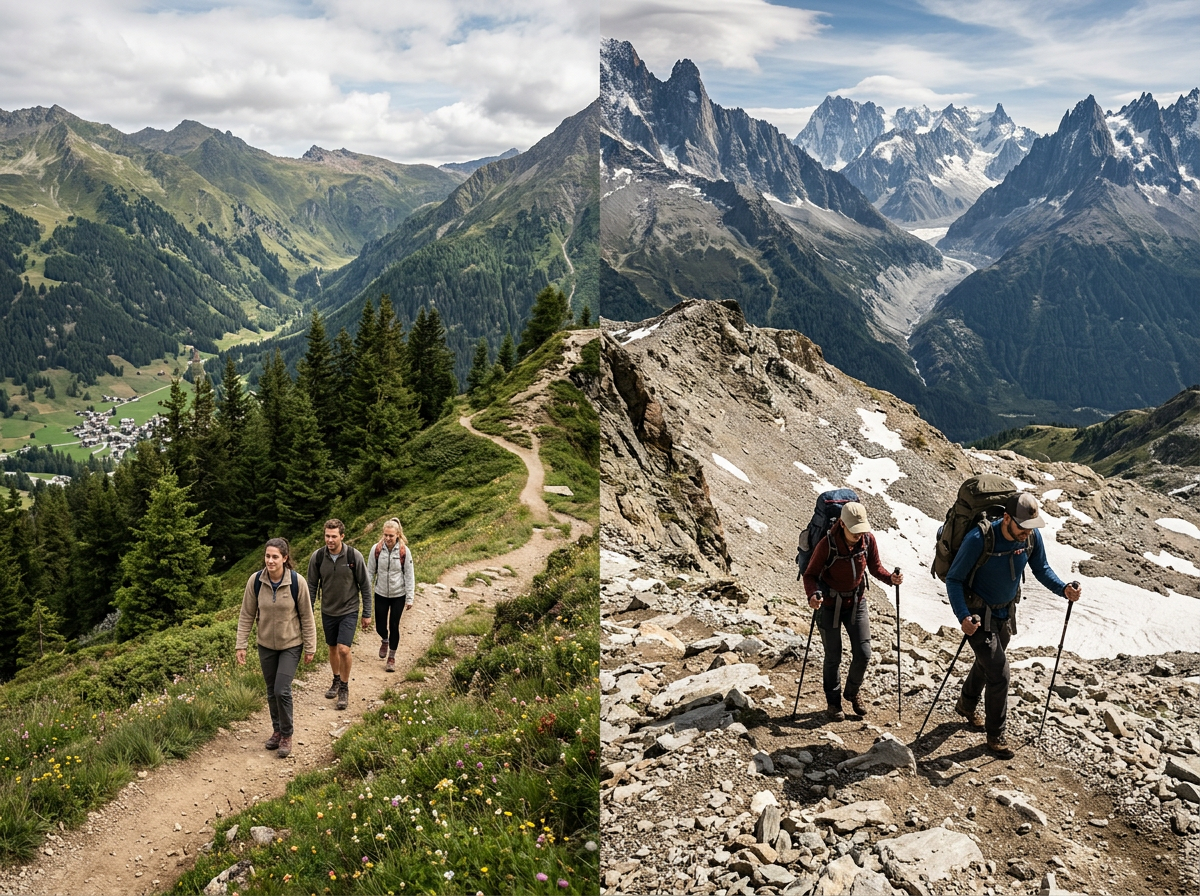


What is the difference between Hiking and Trekking?
⏱ Reading time: approx. 17 min.
Many people love spending time in nature. Terms like hiking and trekking often come up, which seem to mean the same thing.
However, upon closer inspection, there are clear differences in planning, equipment, and the experience. Those who want to experience nature intensely should know the nuances of these activities.
All the features that distinguish hiking and trekking from each other, here.
Brief Summary
- Hiking refers to shorter walks, often day trips, with light luggage.
- Trekking involves multi-day tours in more remote terrain, with overnight stays outdoors or in simple huts.
- Equipment varies greatly: From a daypack for hiking to a large trekking backpack with a tent and stove.
- The physical demand is usually higher for trekking, as longer distances and more challenging terrain are covered.
What exactly do the terms mean?
Hiking and trekking both describe walking in nature, but the intensity and scope differ significantly. Hiking is more of a walk with a sporting character, often on well-marked trails.
Trekking, on the other hand, is an expeditionary undertaking that often lasts several days and leads through rough terrain. Self-sufficiency is a central aspect of the journey here.
The definitions are fluid, but the core characteristics allow for a clear distinction. We speak of hiking when the tour is completed within one day.
The characteristics of hiking tours
Hiking involves day hikes that usually take place on paved or well-walked paths. The duration is typically between two and eight hours.
The luggage is accordingly light: provisions, water, weather protection, and a first-aid kit are often sufficient. The goal is to enjoy nature and engage in sports without major logistical challenges.
An example would be a hike through the Black Forest or an exploration tour in the pre-Alps. Here, the focus is on the nature experience and physical activity. The routes are often well signposted, which simplifies navigation.
What distinguishes trekking experiences
Trekking is a multi-day hike that often leads through remote regions. Here, you are on your own and carry all your equipment for the duration of the tour.
This includes a tent, sleeping bag, stove, food, and often water purification systems. The physical and mental strain is significantly higher than for hiking.
Well-known trekking regions are the Himalayas in Nepal or Patagonia in South America. Such tours require detailed planning and solid preparation, both physically and logistically. Navigation is often done using a map and compass or a GPS device.
What equipment is necessary for each activity?
Choosing the right equipment is crucial for the success and safety of any outdoor activity. Between hiking and trekking, there are fundamental differences that you absolutely must consider.
A light backpack for a short hike differs greatly from a large trekking backpack that needs to hold everything for a multi-day expedition. The demands on material and functionality increase with the duration and remoteness of the tour.
It is often underestimated how important the right shoe choice is. For hiking, light hiking shoes are often sufficient, while for trekking, robust boots with good ankle support are indispensable.
Equipment for relaxed hiking tours
For a hiking tour, you primarily need comfortable hiking boots that offer good grip. A small daypack with a volume of 15 to 30 liters is sufficient to store the most important things.
This includes water, provisions, a light rain jacket, and a first-aid kit. A head covering and sunscreen are also advisable in sunny weather. Trekking poles are often helpful, especially on steeper sections.
The clothing should be breathable and weather-appropriate, ideally in a layering system. Cotton is less suitable here, as it wicks away moisture poorly and takes a long time to dry. Functional synthetic fibers or merino wool are the better choice.
The comprehensive equipment for trekking adventures
Trekking requires significantly more extensive equipment. A trekking backpack with 50 to 80 liters volume is standard for transporting a tent, sleeping bag, sleeping mat, and cooking gear.
Robust, waterproof trekking boots with high shafts are essential to stabilize ankles and protect against moisture. A lightweight and wind-stable tent is crucial for overnight stays in exposed terrain.
Additionally, a reliable stove, fuel, sufficient food, and a water filter or purifier are important. Navigation using a GPS device or topographical map is also mandatory. A reliable first-aid kit with specific medications for longer tours should also be in your pack.
Comparison at a glance
| Criterion | Hiking | Trekking |
|---|---|---|
| Duration | Day trip | Multi-day |
| Luggage weight | Light (3-8 kg) | Heavy (15-25 kg) |
| Terrain | Paved trails | Remote, impassable |
| Accommodation | Home/Hotel | Tent/Hut |
| Demands | Medium | High |
What are the physical and mental demands of the tours?
The demands on body and mind vary greatly between hiking and trekking. A short hike can be relaxing, while a multi-day tour can bring real hardships.
Anyone who opts for a trekking adventure should be prepared for long periods of walking, changing weather conditions, and the need for self-sufficiency. This requires different preparation than a simple day trip.
Mental strength plays a greater role in trekking, as you have to deal with solitude, physical exhaustion, and unforeseen situations. The ability to make decisions under pressure is also required here.
Demands on hikers
Hiking requires a basic level of fitness. You should be able to walk for several hours at a time, even with slight inclines. The cardiovascular system and muscles benefit from regular exercise.
Special preparation is usually not necessary if you are already physically active. The mental challenge is low, as you can rely on known paths and proximity to civilization.
A typical scenario: A four-hour hike with 500 meters of elevation gain in the Alps. Here, good fitness is an advantage, but not extreme endurance. You can turn back or take a break at any time.
Challenges for experienced trekkers
Trekking places high demands on physical endurance and strength. You must be able to cover 15 to 30 kilometers daily with a heavy backpack, often over rough terrain and with extreme changes in altitude.
Comprehensive preparation over several months is advisable, including endurance training, strength training, and carrying the backpack over longer distances. Mental resilience is also put to the test.
You are often out for days without external support, have to cope with adverse weather conditions, and make decisions that affect safety. Problem-solving skills and a high tolerance for frustration are essential here. Sometimes it is also necessary to be able to operate special outdoor navigation devices.
Practical Tip
For trekking beginners, it is recommended to start with shorter multi-day tours. This way, equipment and skills can be gradually adapted before venturing into more challenging expeditions.
What routes and types of terrain are typical?
The environment in which hiking and trekking take place is another important distinguishing feature. Hiking routes are often well-developed and offer a high level of infrastructure.
Trekking routes, on the other hand, lead into the wilderness, where you are on your own. These differences not only influence the planning but also the entire experience of the tour.
You must be aware that the accessibility of help in remote trekking areas is severely limited. This requires a higher degree of self-reliance and risk awareness.
Typical hiking trails
Hiking trails are often well-maintained hiking paths in low mountain ranges or the pre-Alps. They are usually marked and lead through forests, meadows, or along rivers.
The infrastructure is good, with refreshment stops, shelters, and often cell phone reception. The paths are rarely technically demanding and do not require special climbing skills.
An example is the Rheinsteig or the Harzer Hexenstieg, where you can stay overnight in inns daily. The altitude differences are moderate, and you often encounter other hikers.
The challenge of remote trekking areas
Trekking areas are often remote regions, far away from any civilization. These include high mountains, deserts, rainforests, or polar regions.
The paths are often poorly marked or non-existent. You must rely on your navigation skills. The infrastructure is minimal or non-existent.
A trek to Mount Everest Base Camp or a traverse of the Chilean Andes are examples of such undertakings. Here, you are often days without human encounters. The terrain can be extremely challenging, with glaciers, scree fields, or steep passes that require alpine experience.
Did you know?
The term "trekking" originally comes from Afrikaans and means "to pull" or "to wander," which well reflects the often arduous nature of these journeys.
What philosophy and motivation are behind it?
Every outdoor activity is driven by a specific basic attitude and motivation. Hiking often focuses on recreation and the experience of nature.
Trekking, on the other hand, is more strongly characterized by the desire for adventure, challenge, and self-discovery. These different philosophies influence the type of preparation and the expectations for the trip.
Some seek a quick escape from everyday life, others a profound confrontation with their own limits. The choice of activity heavily depends on personal goals.
The motivation for hiking
The motivation for hiking is often recreation from everyday life, exercise in the fresh air, and enjoying beautiful landscapes. It is a form of active relaxation that fits well into a free day.
You seek nature without having to compromise on comfort. The social component often plays a role, as you often hike in groups or interact with others along the way.
A Sunday excursion with the family or a sporty afternoon with friends are typical scenarios. Here, it's about the shared experience and the joy of movement. The return to civilization is always guaranteed.
The philosophy of trekking
Trekking is a search for the primal, for adventure and overcoming personal limits. It is a conscious decision to detach yourself from civilization for a longer period and face the challenges of nature.
Self-sufficiency and autonomy are central aspects. You learn to make do with little and to prove your own abilities. The experiences are often profound and formative.
Many trekkers seek the solitude and silence of the wilderness to get to know themselves better. It's about an intense engagement with nature and one's own physical and mental capacities. Reaching a distant goal, such as a mountain summit or a remote lake, is often the reward for the effort. If you are interested in such tours, you can find further inspiration on our homepage.
Which option fits?
Hiking – For connoisseurs
Ideal for anyone looking for nature experiences without major logistical planning and with moderate physical exertion. Perfect for day trips and weekend activities.
Trekking – For adventurers
The right choice for people who are looking for an intense challenge, want to be self-sufficient, and are willing to spend longer periods in remote wilderness.
What risks and safety aspects need to be considered?
Outdoor activities always carry certain risks that should not be underestimated. However, the nature and extent of these risks differ significantly between hiking and trekking.
With hiking, the dangers are usually manageable, while trekking tours can lead to potentially life-threatening situations. Thorough risk assessment and appropriate preparation are therefore essential.
Unexpected weather changes or losing your way can cause problems even on seemingly simple paths. With trekking, medical emergencies and isolation are added factors.
Safety Aspects of Hiking
When hiking, the main dangers are often twisting an ankle on uneven terrain, minor injuries, or sudden changes in weather. Since it's usually near civilization, help is generally quickly accessible.
A well-packed first-aid kit, a fully charged mobile phone, and knowledge of the weather forecast minimize risks. One should always stay on marked paths to avoid getting lost.
The risk of hypothermia or dehydration is lower, as one can quickly seek shelter or abandon the tour. Nevertheless, a certain level of awareness is always advisable.
Risk Management in Trekking Expeditions
Trekking involves significant risks, ranging from extreme weather conditions and disorientation in impassable terrain to medical emergencies. Isolation means that help is often hours or days away.
A comprehensive risk assessment beforehand is mandatory. This includes analyzing the route, weather conditions, potential hazards, and one's own abilities. An emergency plan and knowledge of basic first-aid measures are essential.
One should always inform someone about the planned route and arrange regular check-ins. A satellite phone or an emergency beacon can save lives in remote areas. The ability to be self-sufficient and make minor equipment repairs is also crucial. Those preparing for such tours should also consider the right clothing for extreme weather conditions.
Myth vs. Fact
Myth
Every long walk is automatically trekking.
Fact
Duration is just one factor; the remoteness of the terrain and the need for self-sufficiency are more decisive in defining trekking.
What are the best preparation strategies?
Good preparation is the key to a successful and safe outdoor experience. Different strategies are required depending on the type of tour.
For hiking, a spontaneous decision is often sufficient, while trekking can require months of planning. Respecting nature and being well-prepared minimizes risks and maximizes enjoyment.
It is important to realistically assess one's own abilities and not overestimate oneself. Training should be specifically tailored to the demands of the planned tour.
Preparation for Hiking Trips
For hiking tours, basic physical fitness is sufficient. Regular walking or light jogging prepares the body well. Planning is usually short-term.
One should check the weather forecast, know the route roughly, and pack enough water and provisions. Equipment is assembled the day before, keeping the effort low.
A look at the map or a quick search of directions is often enough. One does not need complex navigation skills, as the paths are usually well-marked. A good overview of the weather situation helps to avoid unpleasant surprises.
Comprehensive Planning for Trekking Tours
Trekking requires long-term and detailed planning. Training should begin several months in advance and include endurance, strength, and surefootedness. Multi-day test hikes with a full backpack are recommended.
The equipment must be carefully selected and checked for functionality. This includes testing tents, stoves, and sleeping bags under real conditions. The route is planned in detail, including alternative routes and emergency exits.
One must familiarize oneself with map reading, compass navigation, and GPS devices. Knowledge of first aid and wilderness survival techniques is also essential. Psychological preparation for isolation and potential hardships should not be underestimated.
Good to know
The oldest known hiking trails date back to the Stone Age, when people traveled long distances in search of food and new settlements.
Frequently Asked Questions
Concluding Thoughts on Outdoor Planning
The distinction between hiking and trekking is not just a matter of terminology, but significantly influences planning, equipment, and the experience. Knowing the differences allows one to plan outdoor activities more consciously.
It's about accurately assessing personal preferences and abilities. A well-planned tour, be it a short hike or an extended trek, is always beneficial for body and soul.
Nature offers countless opportunities, and with the right knowledge, every adventure becomes an unforgettable experience. Safety should always be the top priority.
What is the Difference Between Hiking and Trekking?
The terms hiking and trekking are often used interchangeably, although they describe distinct activities. Both involve walking in nature, but they differ in duration, intensity, equipment, and the type of experience. A clear understanding of these differences helps in planning your next outdoor adventure and choosing the right gear.
Hiking: The Nature Experience for a Quick Getaway
Hiking, often referred to as a day hike, is an outdoor activity that typically lasts from a few hours to a full day. The paths are usually well-marked and do not require special navigation skills. The terrain is often moderate but can also include challenging inclines. The focus is on experiencing nature, exercising in the fresh air, and discovering beautiful landscapes.
Characteristics of Hiking:
- Duration: A few hours to one day.
- Accommodation: No overnight stay outdoors required. Return to the starting point or a fixed accommodation.
- Equipment: Light daypack with provisions, water, weather-appropriate clothing, first-aid kit.
- Terrain: Well-maintained and marked trails, often near civilization.
- Planning: Low planning effort.
- Example: A walk through a forest park, along a river, or up a local scenic mountain.
Trekking: The Multi-Day Adventure
Trekking, on the other hand, is a multi-day hike that often leads through remote areas. This usually involves overnight stays in tents, huts, or simple accommodations. Trekking tours require careful planning, good physical condition, and more extensive equipment. The goal is often to explore remote regions, experience nature intensively, and test one's own limits.
Characteristics of Trekking:
- Duration: Several days to weeks.
- Accommodation: Overnight stay in a tent, mountain hut, or simple accommodations.
- Equipment: Large trekking backpack with tent, sleeping bag, cooking utensils, provisions for several days, navigation devices, comprehensive first-aid kit, weather-resistant clothing for all eventualities.
- Terrain: Often rugged, alpine, or remote terrain, poorly marked or pathless terrain.
- Planning: High planning effort regarding route, food, water supply, and emergencies.
- Example: A multi-day tour through the Alps, the Himalayas, or Patagonia.
Equipment: The Key to Success
The choice of the right equipment is crucial for safety and comfort in both hiking and trekking. While a light daypack and comfortable hiking shoes are sufficient for hiking, trekking requires significantly more extensive and specialized equipment.
Hiking Equipment:
- Backpack: Lightweight daypack (15-30 liters).
- Footwear: Lightweight hiking shoes or trail runners.
- Clothing: Breathable layers, rain jacket.
- Provisions: Snacks, sufficient water.
- Safety: First-aid kit, cell phone.
Trekking Equipment:
- Backpack: Large trekking backpack (50-80 liters) with good load distribution.
- Footwear: Sturdy, ankle-high trekking boots.
- Clothing: Multiple layers of functional clothing, down jacket, rain pants and jacket.
- Sleeping: Tent, sleeping bag (suitable for the temperature), sleeping mat.
- Cooking: Stove, fuel, pots, cutlery, provisions for the entire tour.
- Navigation: Map, compass, GPS device, power bank.
- Safety: Comprehensive first-aid kit, satellite phone (in remote areas), headlamp.
Conclusion on the right choice
The decision between hiking and trekking largely depends on personal preferences, physical condition, and available time. For those who want to enjoy nature for a day, without much planning and with light luggage, hiking is the ideal activity. It offers a wonderful opportunity to escape everyday life and recharge your batteries.
For those seeking a deeper connection to the wilderness, who love a challenge, and are willing to spend several days or weeks in remote areas, trekking is the right choice. It is an experience that can be physically as well as mentally demanding and often leads to unforgettable moments and strengthened self-confidence. Regardless of the chosen activity, good preparation and appropriate equipment are crucial for a safe and enjoyable outdoor experience.
Ultimately, both activities are about experiencing the beauty of nature and stepping out of your comfort zone. Whether a short trip or an extended adventure – the mountains and forests are waiting to be discovered.
Frequently Asked Questions
What is the main difference between hiking and trekking?
The main difference lies in the duration and scope of the tour. Hiking usually involves day hikes, while trekking includes multi-day tours with overnight stays in nature or simple accommodations.
What physical condition is required for trekking?
A good to very good physical condition is required for trekking, as tours often last for several days, involve challenging terrain, and are completed with heavy luggage.
Can trekking also be done alone?
Trekking can be undertaken alone, but then requires even more careful planning, experience in navigation and emergency management, as well as a realistic assessment of one's own abilities and risks.
What role does equipment play in trekking?
Equipment plays a central role in trekking. Since it often takes place far from civilization, a tent, sleeping bag, cooking utensils, sufficient provisions, and weather-resistant clothing must be carried to be prepared for all eventualities.
Is hiking also suitable for beginners?
Yes, hiking is excellent for beginners. There are numerous easy and well-marked hiking trails that allow for a gentle introduction to the outdoor experience and do not require special equipment or prior knowledge.
















Share:
What season are softshell jackets worn in?
Hut Hiking with Kids - The Best Tips!