



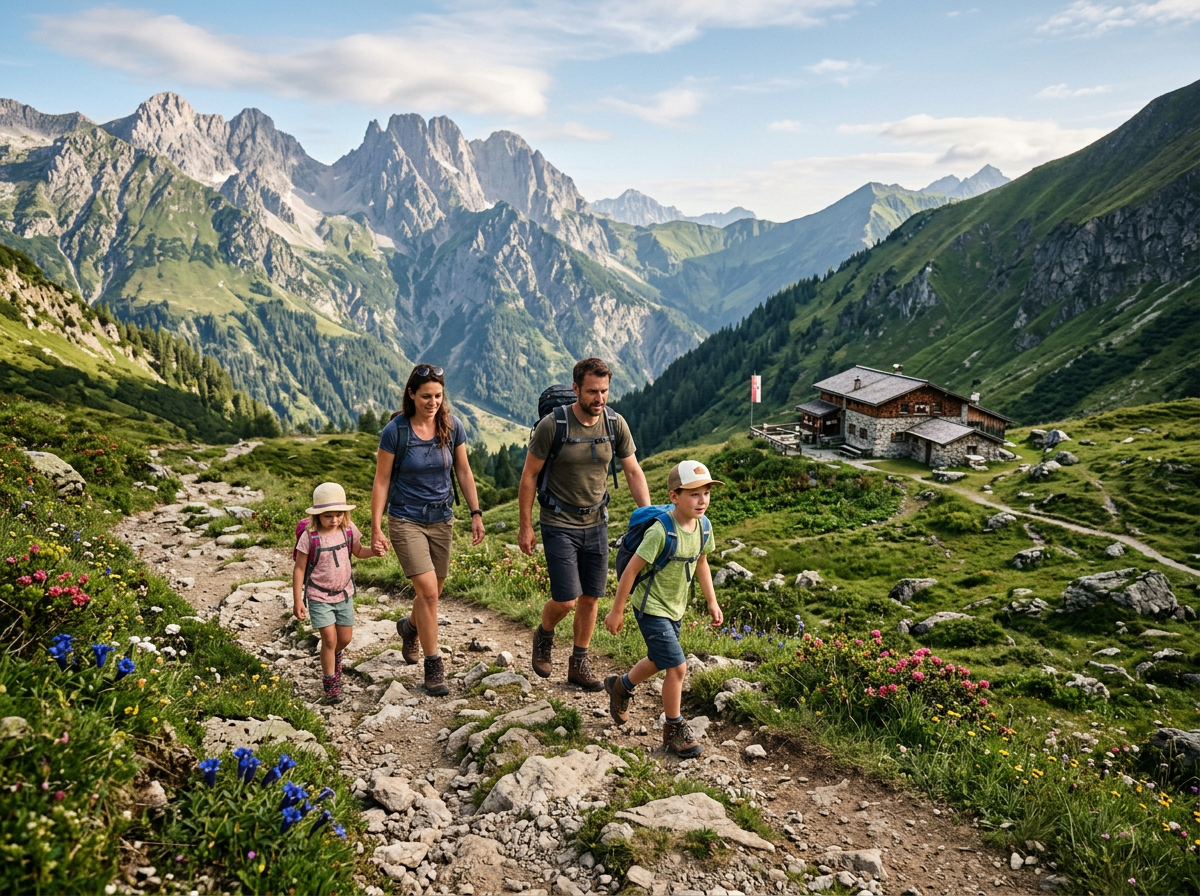


Hut hike with children - the best tips!
⏱ Reading time: approx. 20 min.
A hut hike with the family, especially with the little ones, sounds like a great adventure to many. But often the worry of too long distances, bad weather, or unmotivated children prevails. Many parents hesitate because they shy away from the effort or are unsure whether the little ones will really participate.
Yet, such a tour is a fantastic way to experience nature together and create unforgettable memories as a family. With the right planning and a few clever tricks, the trip to the mountains becomes a real highlight for everyone involved.
This article shows how a hut hike with children can succeed, which preparations are crucial, and how to keep the motivation of the little hikers high. Here are practical tips to make the mountain experience a complete success for young and old.
Briefly summarized
- Route planning must take into account the children's fitness.
- Appropriate equipment is crucial for safety and comfort.
- Motivation through games and rewards promotes fun.
- Flexibility in scheduling avoids overexertion.
How to plan a hut hike with children optimally?
Optimal planning for a hut hike with children begins with a realistic assessment of the youngest participants' abilities. You should adapt the route distance and elevation gain to their age and fitness to avoid overexertion and maintain fun. Careful route selection is therefore essential for a successful mountain experience with the family.
A successful hut hike stands or falls with preparation. Many families fail because they misjudge distances or elevation differences. A common mistake, for example, is choosing a tour that seems easy for adults but is twice as strenuous for children.
Therefore, you should inform yourself precisely about the trail conditions in advance. Are the paths wide and easy to walk on, or are there narrow, exposed sections? Such details can quickly overwhelm children and spoil the joy of the hike.
Which criteria are crucial for route selection?
When choosing a route, several factors are important to make the tour suitable for children. The length of the route should not exceed 5 to 8 kilometers per day, depending on the age of the children. The elevation difference also plays a role; 300 to 500 meters of elevation gain is a realistic upper limit for most families with smaller children.
For example: A family with a six-year-old child should not plan a tour with more than 400 meters of elevation gain and 6 kilometers. This corresponds to about three to four hours of pure walking time. However, breaks, playtime, and photo stops significantly extend the total time.
You should also consider the accessibility of the hut. Is it well connected in case of an emergency or if the children suddenly cannot go on? Some huts are only accessible via long, challenging ascents, which is unsuitable for families.
How to find the right mountain hut for families?
Choosing the mountain hut is crucial for the success of a family hike. Many huts of the German Alpine Club (DAV) or the Austrian Alpine Club (ÖAV) are specifically geared towards families and offer family rooms, playgrounds, or child-friendly meals.
It is worth contacting the huts in advance and asking about offerings for children. Some huts even have special family programs or organize small treasure hunts in the surroundings, which excites the children.
A hut with a stream nearby or a small lake offers additional play opportunities. Such details make the stay particularly attractive for children and provide variety after the hike. Sometimes there are even special hiking trails for families that are specifically tailored to the needs of children.
Practical Tip
You should make hut reservations early, especially during peak season. Many popular family huts are quickly booked up, often months in advance. Confirmation of the reservation is always advisable.
What equipment is essential for a hut hike with children?
For a hut hike with children, the right equipment is of great importance to ensure comfort and safety. You need weather-resistant clothing in layers, sturdy hiking boots with good grip, sufficient provisions and drinks, and first-aid material. Good preparation minimizes risks and significantly increases the fun factor.
Often, one underestimates the weight of the luggage carried on a hut hike. A child carrier for the little ones is essential if you want to cover longer distances. It should be ergonomically shaped and offer good weight distribution to protect the wearer's back.
A common misconception is that you can buy everything you need at a hut. This is not always true, especially in more remote areas. Therefore, a thoughtful packing list is crucial to be prepared for all eventualities.
What clothing protects in all weather conditions?
The layering principle is indispensable for mountain hikes with children. Pack several thin layers that can be put on or taken off depending on the weather. A waterproof rain jacket and pants are a must, even with a good weather forecast, as mountain weather can change quickly.
Functional underwear made of merino wool or synthetic fibers wicks moisture away from the body and keeps you warm. Cotton is unsuitable as it retains moisture, leading to cooling. A fleece sweater as a second layer provides additional warmth.
You should also think about a hat, gloves, and a sun cap. The UV radiation in the mountains is significantly more intense, even on cloudy days. A good sunscreen with a high SPF protects sensitive children's skin.
Which shoes are best for children?
Sturdy, broken-in hiking boots with good tread are essential for children's feet. They provide support on uneven terrain and protect against twisting an ankle. New shoes should definitely be broken in before the tour to avoid blisters.
The shoes should be ankle-high to offer additional protection and stability. Waterproof models with a membrane like Gore-Tex keep feet dry, which is especially important on wet trails or when crossing streams.
You should also pack a pair of light hut shoes or sandals. After a long day of hiking, children will appreciate comfortable shoes to move around in the hut. This relieves their feet and promotes recovery.
Did you know?
Children consume more energy when hiking relative to their body weight than adults, as their steps are shorter and their energy expenditure is higher.
How to maintain children's motivation?
Maintaining children's motivation on a hut hike requires creativity and flexibility. You can make the hike exciting through games, small rewards, and involving the children in the planning. Regular breaks and the opportunity to explore the surroundings also contribute significantly to a positive mood.
Many parents know this: after the first few kilometers, children's enthusiasm wanes. "How much further?" or "I can't go on!" are phrases often heard. But with a few simple tricks, the mood can quickly be lifted again.
It is important not to view the hike as a purely athletic performance, but as a shared experience. Nature offers countless opportunities for discovery and play, which you should use to keep the children entertained.
Which games and activities lighten up the hike?
Games make the hike more entertaining for children. You can, for example, play "I spy with my little eye" or organize a small nature rally. Children search for specific objects like a special stone, a leaf, or a feather.
A hiking song or a story told together distracts from the effort. Counting animals or observing cloud formations can also stimulate imagination and make time pass more quickly.
You should also assign small tasks to the children that give them a sense of importance. Carrying a light backpack with their own water bottle or navigating with a simple map strengthens self-confidence and personal responsibility.
How do rewards and breaks help with motivation?
Small rewards can work wonders. A gummy bear for every kilometer, a small chocolate bar on the summit, or a new Pixi book at the hut – such incentives motivate children immensely. However, these rewards should be used sparingly and strategically.
Regular breaks are also essential. It's better to take more frequent, shorter breaks than one long break where the children cool down or lose motivation. During each break, you can have a small snack or explore the surroundings.
A particularly effective motivational boost is the prospect of a special experience at the hut. A warm cocoa, an exciting card game, or the chance to meet other children can make the last few meters easier. Exploring caves can also be an unforgettable experience.
Rating at a glance
What safety aspects should be considered when hiking to huts with children?
When hiking to huts with children, safety aspects are of the highest priority to prevent accidents and enable a carefree nature experience. You should closely monitor the weather forecast, carry a detailed map and a GPS device, and have comprehensive first-aid equipment ready. Educating children about alpine dangers is also essential.
The mountains harbor risks that one should not underestimate, especially when children are present. A sudden change in weather or a sprained ankle can quickly lead to a serious situation. Therefore, a thorough risk assessment before and during the tour is essential.
A widespread misconception is that one can rely on a mobile phone. However, in many alpine regions, there is no reception, which makes communication difficult in an emergency. Therefore, one should always have alternative communication methods or emergency plans ready.
What belongs in a family first-aid kit?
A well-equipped first-aid kit is mandatory on every hike. For families, it should include special medications for children in addition to standard items. These include, for example, fever and pain medication, wound disinfectants, plasters in various sizes, and tick tweezers.
You should also think about blister plasters and tape, as blisters on children's feet can quickly lead to tears. Small scissors, tweezers, and sterile compresses complete the basic equipment. A hand sanitizer is also practical if you don't have the opportunity to wash your hands along the way.
It is advisable that at least one adult in the group has completed a first-aid course. In an emergency, quick and correct action can be crucial. You should regularly check the equipment and replace expired items.
How to prepare children for alpine dangers?
Educating children about alpine dangers should be done in a playful and age-appropriate manner. Explain that they should stay on the paths, not throw stones, and always listen to adults. Awareness of nature and potential risks is important.
You should show children how to behave during a thunderstorm or what to do if they get lost. Carrying a whistle can help attract attention in an emergency. You should always have an emergency number handy.
An important aspect is also dealing with wild animals. Explain to children that they should not feed or provoke animals. Respect for nature and its inhabitants is a cornerstone for safe hikes. Sometimes you can also attend special courses for alpine safety.
Which option fits?
Short day trip
Ideal for families with small children or hiking beginners, low elevation gain and short distances.
Multi-day hut tour
For families with experienced hiking children from about 6 years old, who master longer distances and overnight stays.
In short: Safety in the mountains requires comprehensive preparation, good equipment, and age-appropriate education of children about potential dangers.
How to make an overnight stay at a hut child-friendly?
An overnight stay at a mountain hut can be a highlight for children if it is prepared correctly. You should prepare children for the peculiarities of hut life, such as multi-bed rooms and limited sanitary facilities. A small hut sleeping bag and a cuddly toy contribute to coziness, while evening rituals provide familiarity.
For many children, the first hut overnight stay is an exciting but also unfamiliar experience. The cramped conditions of the dormitory, the snoring of fellow hikers, or the lack of privacy can be irritating at first. Good preparation allays children's fears and awakens anticipation.
You should show the children pictures of the hut beforehand and explain how life there works. A hut evening with games or reading aloud can strengthen community and help children quickly get used to the new environment.
Which peculiarities of hut life should be explained?
Hut life differs greatly from everyday life at home. You should explain to the children that there is often only cold water or that the lights are turned off at a certain time. The hut quiet hours from 10 PM are also an important point that should be discussed in advance.
The shared rooms, often called "Lager," are a new experience for children. You should explain that they will be sharing the space with other hikers and need to be considerate. A small backpack with essential personal items, like a toothbrush and pajamas, should be kept readily accessible.
Sometimes there are also hut rules that you can read to the children. This promotes understanding of the community and the procedures at the hut. Respectful interaction with nature and other guests is, of course, part of this.
What goes into the hut sleeping bag?
A lightweight hut sleeping bag made of cotton or silk is mandatory at many huts. It serves for hygiene and is more comfortable than the hut blankets. You should explain to the children that the sleeping bag is their personal space.
In addition to the sleeping bag, a small pillow or an inflatable neck pillow also belongs in the backpack. A cuddly toy or a familiar toy can help children fall asleep and provide a sense of security.
You should also remember a small headlamp or flashlight. This way, children can find their way to the toilet at night without disturbing other hikers. A small book to read aloud or a card game for the evening rounds off the equipment.
Myth vs. Fact
Myth
A hut hike is too strenuous for small children.
Fact
With age-appropriate planning, plenty of breaks, and playful elements, even small children can enjoy a hut hike.
Important to know
A membership card of an Alpine Club (DAV, ÖAV, SAC) often offers discounts for overnight stays and meals at the huts. Don't forget it.
How do you prepare provisions for on the go and at the hut?
Proper catering is crucial on a hut hike with children to provide energy and keep spirits high. You should pack enough energy-rich snacks and drinks for on the go that the children will enjoy. At the hut, you can look forward to simple but strengthening meals, often prepared regionally and fresh.
An empty stomach can quickly spoil the best hiking mood. Children need regular energy intake to stay active. A common mistake is to pack too few or the wrong snacks.
You should aim for a mix of quick energy providers and more filling foods. A well-planned snack break is not only a boost but also a welcome respite from the daily hike.
Which snacks are ideal for the hike?
For the hike, snacks that are easy to transport and quickly provide energy are suitable. These include dried fruit, nuts (if there are no allergies), granola bars, and whole-grain biscuits. Fruit like apples or bananas is also a good choice.
You should also think of small treats that can serve as a reward, such as gummy bears or chocolate. However, these should not replace the main meal but serve as motivation.
Drinking enough is especially important. Water or unsweetened tea in reusable bottles are ideal. You can also take a small thermos with warm cocoa, which is a welcome change, especially on cooler days.
What can you expect from the hut provisions?
Food at mountain huts is usually simple but nutritious and tasty. You often get hearty soups, pasta dishes, or dumplings. Many huts value regional products and fresh ingredients.
You should find out in advance whether the hut offers special children's meals or if it is possible to express individual wishes if a child has allergies or intolerances. Early communication with the hut warden is advisable here.
A highlight for many children is communal dinner with other hikers. This promotes community and offers the opportunity to make new contacts. However, you should consider that prices at the huts may be higher than in the valley due to the elaborate transport of food.
Advantages
- Community experience for the family
- Intensive connection to nature
- Promotion of physical fitness
- Unforgettable memories
Disadvantages
- High planning effort
- Possible weather changes
- Risk of overwhelming the children
- Limited comfort in huts
How do you deal with unforeseen situations?
Unforeseen situations can always occur on a hut hike with children, but with the right attitude and preparation, they can be mastered. You should always have a plan B ready, react flexibly to the children's needs, and not hesitate to turn back in an emergency. A positive and calm attitude from adults usually transfers to the children.
Even the best planning does not protect against everything. A sudden rain shower, a tired child, or a minor injury can disrupt the day's plan. It is important not to panic but to react calmly.
Sometimes it is better to cancel the hike or choose an alternative route than to overwhelm the children. The safety and well-being of the family always come first.
What to do in case of bad weather or tired children?
In bad weather, it is not advisable to take risks. A thunderstorm in the mountains is dangerous. You should turn back early or seek shelter in a hut. Good rain gear protects against wetness, but not against lightning strikes.
If the children get tired, a longer break with provisions and games often helps. Sometimes it is also necessary to carry them for part of the way if the children are still small. A child carrier is invaluable here.
You should not force children to continue if they are truly exhausted. This can lead to frustration and resistance. A flexible time schedule without rigid kilometer goals is therefore advisable.
How do you react to minor injuries or accidents?
Minor injuries such as scrapes or blisters are part of hiking. With the prepared first-aid kit, these can usually be treated quickly. You should clean wounds, disinfect them, and protect them with a plaster or bandage.
In the case of more serious injuries, such as a sprained ankle or an insect bite with an allergic reaction, quick action is required. You should dial the emergency number and reassure the children. A rescue blanket protects against hypothermia.
It is important to remain calm and convey a sense of security to the children. Your own composure helps the children cope with the situation. You should always have an emergency app on your smartphone that can transmit the GPS position.
In short: Flexibility, a good first-aid kit, and a calm reaction are crucial to successfully master unforeseen situations on a hut hike with children.
Frequently asked questions
How does it prepare children for alpine dangers?
Educating children about alpine dangers should be done in a playful and age-appropriate manner. It explains to them to stay on the paths, not to throw rocks, and always listen to adults. Awareness of nature and potential risks is important.
What special aspects of hut life should be explained?
Hut life is very different from everyday life at home. It should be explained to the children that there is often only cold water or that the lights are turned off at a certain time. The hut's quiet hours from 10 PM is also an important point to discuss beforehand.
What belongs in the hut sleeping bag?
A lightweight cotton or silk hut sleeping bag is mandatory in many huts. It serves for hygiene and is more comfortable than the hut blankets. It should be explained to the children that the sleeping bag is their personal space.
Which snacks are ideal for the hike?
For hiking, suitable snacks are those that are easy to transport and provide quick energy. These include dried fruit, nuts (if there are no allergies), muesli bars, and whole-wheat biscuits. Fruits like apples or bananas are also a good choice.
What to expect from the hut catering?
Food in mountain huts is usually simple, but nutritious and tasty. You often get hearty soups, pasta dishes, or dumplings. Many huts prioritize regional products and fresh ingredients.
What to do in case of bad weather or tired children?
In case of bad weather, it is advisable not to take any risks. A thunderstorm in the mountains is dangerous. You should turn back early or seek shelter in a hut. Good rain gear protects against wetness, but not against lightning strikes.
How to react to minor injuries or accidents?
Minor injuries such as scrapes or blisters are part of hiking. With the prepared first-aid kit, these can usually be treated quickly. You should clean and disinfect the wounds and protect them with a plaster or bandage.
What equipment is necessary for children in a hut?
For children in a hut, a lightweight cotton or silk hut sleeping bag is essential, as it serves for hygiene and provides comfort. They also need a change of clothes, personal hygiene items, a small headlamp, and possibly a cuddly toy or book for coziness in the dormitory.
How to motivate children who no longer want to hike?
Children are motivated on a hike through playful elements like treasure hunts or counting animals, as well as through small rewards such as sweets or stories. Regular, short breaks and the opportunity to explore the surroundings also help maintain the joy of hiking.
Are hut hikes possible with a stroller?
Hut hikes with a stroller are only possible on very few, specially designated paths that are wide and well-paved. Most alpine hiking trails and accesses to mountain huts are unsuitable for strollers, as they are too narrow, steep, or uneven.
How to plan the first hut hike with the family?
The best way to plan the first hut hike with the family is to choose a short, easy route with minimal elevation gain and reserve a family-friendly hut. You should prepare the children for the tour in an age-appropriate manner, pack the equipment carefully, and allow enough time for breaks and games.
How to motivate children while hiking?
Motivation is key to a successful hut hike. Small games, collecting natural materials, or discovering animal tracks can liven up the hike. Rewards in the form of small snacks or the promise of a special activity at the hut often work wonders. Telling stories or singing together can also lift spirits and shorten the time.
Which equipment is particularly important for children?
In addition to weather-resistant clothing and sturdy footwear, a small backpack with their own snacks and drinks, headwear, and sun protection are essential for children. A small magnifying glass or binoculars can increase their joy of discovery. For overnight stays in a hut, a lightweight hut sleeping bag is mandatory. Products that protect the skin should be fragrance-free and without perfume to avoid irritation.
What to do in case of bad weather during the hut hike?
Bad weather can dampen spirits, but it doesn't have to ruin the hike. A good rain jacket and pants are essential. In the hut, board games, coloring books, or reading stories are good options. Many huts also have small play areas. Flexibility in tour planning and the option to shorten a hike or spend an extra night in the hut can also be helpful.
How to prepare children for staying overnight in a hut?
Staying overnight in a hut is an adventure for many children. It helps to talk about the special features beforehand: sleeping in a dormitory, the community, and the often simple sanitary facilities. Their own small toiletry bag with fragrance-free and pollutant-free care products provides a sense of familiarity. Taking a favorite cuddly toy can also make the transition easier.
Final thoughts on family hiking in the mountains
A hut hike with children is a wonderful opportunity to discover the fascination of the mountains together and spend valuable family time. With the right planning, suitable equipment, and plenty of patience, the adventure will become an unforgettable experience for everyone involved. It's not about breaking records, but about enjoying nature to the fullest.
The length of the hut hike also determines the packing list for the hut tour
The mountains offer a unique backdrop for shared experiences that strengthen family bonds. You learn to overcome challenges together and celebrate the small successes along the way. These experiences shape children sustainably and often awaken a lifelong love for nature.
You should not be discouraged by initial difficulties. Every hike is a learning experience, and with time you develop a feeling for what is good for the family. In the end, it's not about the distance covered, but the time spent together and the joy of movement in the fresh mountain air.
Good to know
The Alps cover an area of about 200,000 square kilometers and stretch across eight countries, offering countless hiking opportunities.
Frequently Asked Questions about Hut-to-Hut Hiking with Children
At what age is hut-to-hut hiking with children advisable?
The appropriate age strongly depends on the individual development and fitness of the children. Short, easy tours are often possible with preschoolers if they enjoy walking. For longer or more demanding hikes, children should generally be of elementary school age and already have a certain level of endurance. It is important to adjust the route and altitude to the abilities of the youngest participants.
How do you motivate children while hiking?
Motivation is key to a successful hut-to-hut hike. Small games, collecting natural materials, or discovering animal tracks can liven up the hike. Rewards in the form of small snacks or the promise of a special activity at the hut often work wonders. Telling stories or singing together can also boost spirits and make time pass more quickly.
What equipment is particularly important for children?
In addition to weather-resistant clothing and sturdy footwear, a small backpack with their own snacks and drinks, a head covering, and sun protection are essential for children. A small magnifying glass or binoculars can enhance their joy of discovery. For overnight stays in a hut, a lightweight hut sleeping bag is mandatory. Products that protect the skin should be fragrance-free and without perfume to avoid irritation.
What to do in case of bad weather during a hut-to-hut hike?
Bad weather can dampen spirits but doesn't have to ruin the hike. A good rain jacket and trousers are essential. In the hut, board games, coloring books, or reading stories are good options. Many huts also have small play areas. Flexibility in tour planning and the possibility of shortening a hike or spending an extra night at the hut can also be helpful.
How to prepare children for an overnight stay in a hut?
Staying overnight in a hut is an adventure for many children. It helps to talk about the special features beforehand: sleeping in a dormitory, sharing facilities, and often simple sanitary facilities. Their own small toiletry bag with fragrance-free and pollutant-free care products provides a sense of familiarity. Taking a favorite cuddly toy can also ease the transition.
Conclusion on a successful hut-to-hut hike with children
A hut-to-hut hike with children is a wonderful way to experience nature together and create unforgettable memories. Careful planning, considering the needs of the children, and a flexible attitude are crucial for success. It's not about breaking summit records, but about enjoying time together in the mountains and fostering a love for movement.
The selection of the right equipment, motivating the little hikers, and preparing for possible challenges significantly contribute to making the tour a positive experience for all involved. Products that nourish and protect the skin should always be fragrance-free and without perfume to avoid unnecessary irritation of sensitive children's skin. Good preparation lays the foundation for a carefree adventure.
Ultimately, every hut-to-hut hike with children is a journey full of small discoveries and shared moments. The mountains offer a unique playground where children can test their limits and see the world with new eyes. With the right tips and a bit of serenity, the hut-to-hut hike becomes a highlight that strengthens and connects the whole family.



















Share:
What is the difference between hiking and trekking?
What RET and MVTR values in jackets mean