



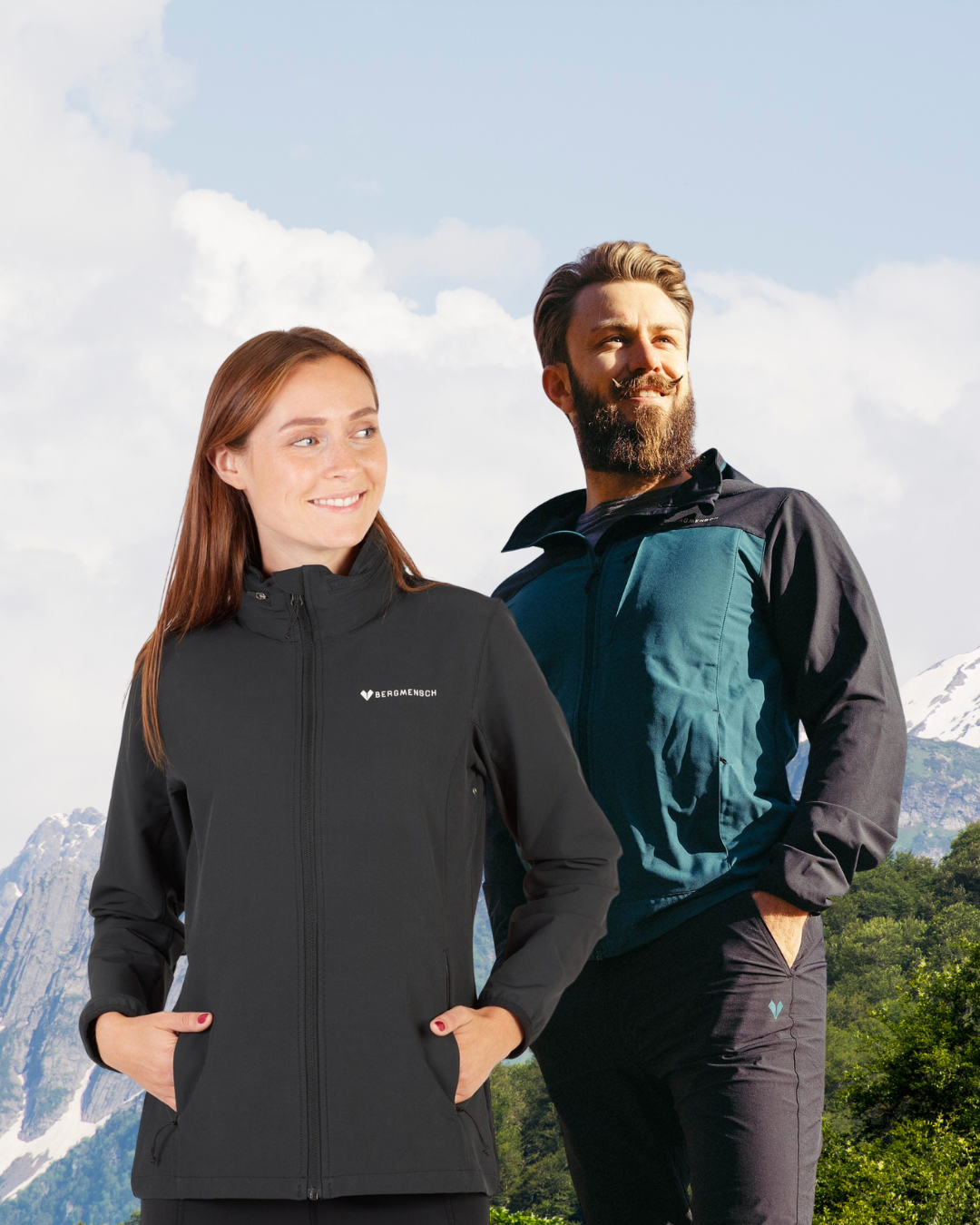


When are softshell jackets used?
⏱ Reading time: approx. 12 min.
Choosing the right outdoor clothing is a challenge for many. Softshell jackets in particular, often advertised as all-rounders, cause confusion regarding their optimal area of use. Incorrect use can quickly lead to discomfort, be it due to overheating or insufficient protection.
'

A sudden gust of wind or light rain can surprise you on a hike, and your clothing is inadequate. Or vice versa, the jacket is far too warm for the current conditions. The right layer is crucial for comfort and performance.
When do softshell jackets make sense?
This article explains in detail when a softshell jacket plays to its strengths. It shows what properties it has and how it can be optimally integrated into the layering system. This significantly improves the outdoor experience.
Brief summary
- Softshell jackets are ideal for transitional seasons like spring and autumn.
- offer wind protection and light water repellency, but are not fully waterproof.
- Breathability is a decisive advantage during physical activity.
- For cold winter days or heavy continuous rain, hardshell jackets are the better choice.
When are softshell jackets the best choice?

Softshell jackets are an excellent choice for changeable weather in transitional seasons, as they offer a good balance of wind protection, breathability and light water repellency. They are ideal for activities where freedom of movement and comfort are paramount, such as hiking or cycling.
A sunny autumn day can suddenly be interrupted by a fresh wind or light drizzle. This is exactly where the softshell jacket plays to its strengths. Its material, often a combination of polyester and elastane, protects against cool wind without restricting movement.
Breathability is a decisive factor. During physical activity, body heat is generated that needs to be dissipated to the outside. Softshells allow water vapor to escape, which prevents an unpleasant feeling of dampness inside. This is a clear advantage over many hardshell jackets, which are often less breathable.
Spring and autumn: The ideal softshell season
In spring and autumn, temperatures are often between 5 °C and 15 °C. Here, a softshell jacket offers the necessary protection against cool gusts and the first drops of rain. It can be worn directly over a functional shirt, which allows for a flexible layering system.
A typical scenario: it's still cool in the morning, the sun warms up at midday. A softshell jacket adapts to these conditions. The elastic fibers ensure an excellent fit and unrestricted freedom of movement, which is particularly appreciated during outdoor activities such as climbing or trail running.
The light water repellency, often achieved by a DWR (Durable Water Repellent) coating, protects against short, light rain. In a shower, water simply rolls off. For longer or heavier precipitation, however, a waterproof hardshell jacket is required.
Use during physical activity
For activities of medium to high intensity, such as mountain hiking or mountain biking, the breathability of a softshell jacket is invaluable. The body stays dry because sweat is effectively wicked away from the body.
The material composition varies greatly. Some softshells are thinner and lighter, ideal for fast tours. Others are more robust and have a light fleece lining that provides additional warmth. These models are well suited for colder temperatures or less intense activities.
Another advantage is the low noise level. Unlike rustling hardshells, softshell jackets are often quieter, which is particularly important for observing animals or simply for a more pleasant nature experience.
What properties make softshells so versatile?

The versatility of softshell jackets results from their unique material construction, which combines breathability with wind and light water repellency. They also offer high elasticity and wearing comfort, which makes them predestined for various outdoor activities.
An essential feature is the membrane technology, which is often used in softshell fabrics. These membranes are microporous, meaning they allow water vapor molecules to pass from the inside to the outside, but keep larger water droplets out. This ensures a balanced body climate.
The elasticity of the fabric is also crucial. A stretch component, often due to elastane, allows unrestricted freedom of movement. This is particularly important for sports that require a lot of physical effort, such as climbing or ski touring. Here, the clothing feels like a second skin.
Material composition and its advantages
Softshell fabrics usually consist of several layers laminated together. The outer layer is often a durable polyamide or polyester, which offers abrasion resistance and a certain robustness. This layer is also usually treated with a DWR coating.
The middle layer forms the actual softshell membrane, which is responsible for wind protection and breathability. The inner layer often consists of a soft fleece material. This fleece provides warmth and effectively wicks moisture away from the body.
Some models do without a membrane and instead rely on a tight weave to repel wind. These are then extremely breathable, but offer less protection from wind and wetness. The choice depends heavily on the intended use.
Practical tip
When buying a softshell jacket, pay attention to the information on the water column and breathability. A water column of 5,000 mm to 10,000 mm is sufficient for light rain, while values above 10,000 g/m²/24h indicate very good breathability.
Differences to hardshell jackets
The main difference to hardshell jackets lies in waterproofness. Hardshells are absolutely waterproof, often equipped with a membrane such as Gore-Tex or similar technologies that can withstand even the heaviest rain. However, they are generally less breathable and flexible.
Softshells are water-repellent, but not completely waterproof. Their strength lies in the combination of wind protection, breathability and wearing comfort. They are softer, more flexible and rustle less. For continuous rain, the hardshell is indispensable; for changeable weather, the softshell.
Another aspect is the pack size. Lighter softshells can often be packed smaller than robust hardshells. This is an advantage not to be underestimated on tours where every centimeter in the backpack counts. A hardshell then serves as a backup in the backpack when the weather changes.
In short: Softshell jackets score with breathability and flexibility, while hardshells convince with absolute waterproofness in extreme weather conditions.
How to choose the right softshell jacket for winter?
Choosing the right softshell jacket for winter requires a close look at the insulation properties and the planned activity. A winter softshell should provide more warmth while ensuring freedom of movement to function optimally in colder temperatures.
In winter, temperatures often drop below freezing, and the demands on clothing increase. A conventional softshell jacket is usually too thin. This is where lined softshell models come into play, which offer an additional insulating layer.
Consider whether the jacket is intended for static activities or for movement-intensive sports. When ice climbing or ski touring, high breathability is crucial to avoid overheating. For a leisurely walk in the snow, it can be a little warmer.
Lined softshells for cold days
For winter use, softshell jackets with a thick fleece inner layer or an additional insulating layer, for example made of Primaloft, are ideal. These models offer significantly higher thermal performance than the unlined counterparts.
Some manufacturers even integrate a windproof membrane that minimizes the chilling effect of the wind. This is particularly important in exposed areas or during fast descents when skiing. The combination of insulation and wind protection makes these jackets versatile companions.
However, it should be noted that thicker lining often leads to a lower degree of breathability. A compromise must be found here that suits your own activity and individual cold sensation. A good softshell for winter often has ventilation zippers under the arms.
Combination with other layers
The onion principle is essential in winter. A softshell jacket often forms the outer layer. Underneath, one or more insulating layers, such as a thin down jacket or a fleece jacket, are worn. The base layer should consist of moisture-wicking merino wool or synthetic fiber.
In extremely cold temperatures, a thin softshell jacket can also be worn as a midlayer under a waterproof hardshell jacket. This provides additional warmth and wind protection, while the hardshell takes over the weather protection. This combination is flexible and adaptable.
The choice of the right underwear is just as important. Functional underwear made of merino wool regulates the temperature excellently and prevents odor. Cotton is unsuitable in winter because it stores moisture and cools down.
Did you know?
The breathability of softshell fabric can reach up to 20,000 g/m²/24h, which corresponds to a very high moisture transport.
For what weather conditions are softshell jackets not suitable?
Softshell jackets are not optimal for all weather conditions. They reach their limits in heavy continuous rain, extremely cold temperatures without additional insulation, and very windy conditions that require 100% wind protection. Here, more specialized jackets are the better choice.
A common misconception is that softshell jackets are completely waterproof. This is not the case. In a heavy downpour or prolonged precipitation, the material will eventually become soaked. Water penetrates through the seams and the fabric structure, leading to an unpleasant feeling of cold.
Even in icy temperatures, for example below -5 °C, a softshell jacket without an additional insulating layer is insufficient. The wind protection may be given, but the thermal performance is not enough to keep the body warm. There is a risk of hypothermia here, especially with low physical activity.
Heavy rain and continuous rain
For alpine terrain, where sudden weather changes with heavy rain or even hail are not uncommon, a hardshell jacket is the only right choice. Welded seams and a waterproof membrane offer reliable protection from wetness.
You should not rely on the water repellency of a softshell jacket if you are out in the rain for hours. The DWR coating wears off over time and must be renewed regularly. A soaked softshell also loses its insulating effect.
A practical example: a hike in the Scottish Highlands, known for its unpredictable weather. Here, a hardshell jacket would always be taken along, even if the softshell is worn as an outer layer. The hardshell serves as emergency protection in the backpack.
Extreme cold and icy wind
At temperatures far below freezing, such as those encountered during winter mountaineering or in Arctic regions, a softshell jacket alone is not sufficient. Here, a combination of several highly insulating layers is required. A down jacket or a synthetic fiber jacket with high loft is then indispensable.
Even if a softshell jacket offers good wind protection, it is not always 100% windproof. In an icy storm, cold air can penetrate the fabric and cool the body down. A windproof hardshell or a special windproof intermediate layer is then the better option.
Always check the weather forecast and adjust clothing accordingly. A light softshell model is perfect for a mild autumn day, but completely unsuitable for a winter hike in the Alps. The right equipment is crucial for safety and well-being outdoors.
Advantages
- High breathability
- Excellent freedom of movement
- Good wind protection
- Light water repellency
- Comfortable to wear
Disadvantages
- Not waterproof
- Limited insulation in cold weather
- Less robust than hardshells
- Not for extreme continuous rain
- Less protection in strong storms
What types of softshells are there and what are they suitable for?
Softshell jackets can be broadly divided into different types that differ in material thickness, lining and weather protection. These variants are optimized for specific applications, from light, breathable models for summer to robust, insulated jackets for winter.
A distinction is mainly made between light softshells, which are suitable for warmer temperatures, and robust, lined softshells for cooler conditions. The choice depends heavily on the intensity of the activity and the expected weather conditions.
Another distinguishing feature is the membrane equipment. Some softshells are equipped with a windproof membrane that significantly increases protection from wind. Others do without it to ensure maximum breathability. This directly influences wearing comfort and the area of application.
Light softshells for summer and mild transitions
Light softshells are often thin, uninsulated and extremely breathable. They are ideal for summer hikes in the mountains, where protection from wind and light showers is needed, but no additional warmth. Their light weight and small pack size make them ideal companions.
These models are perfect for high-intensity activities such as trail running or fast hiking. They quickly wick away sweat and prevent the body from overheating. They often have a DWR coating that allows light rain to bead off.
An example: A softshell made of a thin stretch fabric that feels like a second skin. It protects against cool morning winds, but can be easily stowed in a backpack when temperatures rise. Its functionality is designed for maximum freedom of movement and breathability.
Robust softshells for cooler conditions
Robust softshells are often thicker, sometimes with a light fleece lining or warmer insulation. They offer more protection from cold and wind, but are still more breathable than hardshell jackets. These models are ideal for autumn, spring, and mild winter days.
They are often used for ski touring, winter hiking, or snowshoeing. Here, the combination of warmth, wind protection, and breathability is crucial to avoid overheating during physical exertion and to prevent getting cold during breaks.
Some of these softshells are equipped with reinforced shoulder and elbow areas to increase abrasion resistance. This is particularly advantageous for activities like climbing or carrying a heavy backpack. The durability of the material is an important aspect here.
Important to know
The lifespan of a DWR coating on softshell jackets is approximately 10 to 20 washes with regular use. Regular re-impregnation is essential for maintaining the water-repellent function.
Frequently asked questions
Conclusion on optimal softshell use
Softshell jackets are indispensable companions for anyone who is active outdoors in changeable weather. Their strengths lie in the combination of wind protection, breathability, and flexibility, which makes them the first choice for transitional seasons and activities involving a lot of movement.
However, their limitations should be known: for heavy continuous rain or extreme cold without additional insulation, they are not the optimal solution. In such cases, it is better to opt for a waterproof hardshell or a warmer insulation jacket.
The right softshell jacket is chosen by considering the intended use, weather conditions, and individual sensitivity to cold. With the right model, every outdoor experience can be made more comfortable and safer.







Share:
Outdoor Backpacks - What Types Are There?
What is the difference between hiking and trekking?