



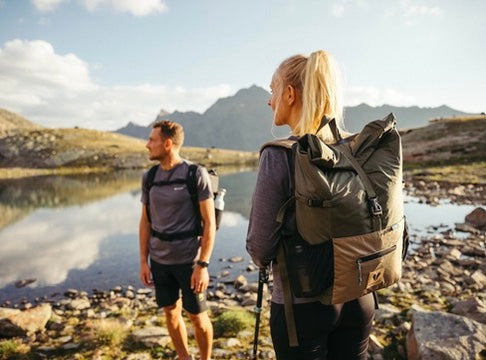


Outdoor Backpacks - These are the types available
A suitable backpack is essential for every outdoor adventure. The wide selection of models often makes the decision difficult.
But which type of backpack is suitable for which activity? There are specialized solutions for hikes, trekking tours, or via ferratas.
This overview helps to understand the different types and find the optimal companion for the next undertaking. This ensures that the equipment is perfectly coordinated.
In short
- The right outdoor backpack strongly depends on its intended use.
- Volume, carrying system, and material are crucial criteria.
- Special backpacks offer advantages for climbers, hikers, or travelers.
- Ergonomics and adaptability significantly increase carrying comfort.
What types of backpacks are there for outdoor activities?
For outdoor activities, there are various types of backpacks that differ in volume, carrying system, and features. Hiking backpacks are usually smaller and lighter, while trekking backpacks are designed for longer tours with a lot of luggage. Climbing backpacks are narrow and robust to ensure freedom of movement.
The choice of the right backpack significantly influences comfort and efficiency on tour. A wrongly chosen backpack can quickly lead to back pain or restricted freedom of movement. This significantly diminishes the experience.
Classification is often based on the intended area of use. A day trip requires different characteristics than a multi-day expedition. The weight to be carried also plays a role.
Hiking backpacks: Light and compact for day trips
Hiking backpacks are typically designed for shorter excursions. Their volume is usually between 15 and 35 liters, offering enough space for provisions, rain gear, and personal items.
A well-ventilated back system is particularly important here. It prevents excessive sweating, especially during strenuous ascents. Many models feature mesh backs that allow airflow between the back and the backpack.
Additional compartments for water bottles or hiking maps increase practicality. The low inherent weight of these backpacks conserves energy, leaving more energy for the nature experience.
Trekking backpacks: Robust companions for long distances
Trekking backpacks are the heavyweights among outdoor backpacks. Their capacity ranges from 40 to over 80 liters and are intended for multi-day to multi-week tours where a lot of equipment is transported.
The carrying system is of central importance for these models. It must efficiently distribute the weight to the hips and shoulders. Adjustable back lengths and a stable hip belt are standard, ensuring the load is optimally carried.
Materials such as Cordura or Ripstop nylon guarantee high abrasion resistance and durability. These backpacks are often equipped with numerous attachment options for tents, sleeping mats, or ice axes.
What role does volume play in choosing a backpack?
The volume of a backpack, measured in liters, is a decisive criterion for selecting the right model. It determines how much equipment and provisions can be transported and must be directly adapted to the duration and type of the planned activity to avoid overloading or lack of space.
A volume that is too small means that not everything necessary can be taken along. A model that is too large, on the other hand, tempts one to unnecessarily carry around items. This increases the total weight and reduces comfort.
one should realistically estimate what equipment is truly needed. A packing list helps to determine the required volume, thus avoiding bad purchases.
Volume ranges for different types of tours
For day trips, backpacks with a volume of 15 to 30 liters are usually sufficient. Everything for one day fits here: water, snacks, rain jacket, and a first-aid kit.
For weekend trips over one to two nights, a volume of 30 to 50 liters is recommended. A small sleeping bag and a change of clothes will also fit here. A tent can often still be attached to the outside.
For longer trekking tours lasting several days to weeks, backpacks of 50 liters and up are necessary. All equipment for bivouac, cooking, and hygiene must be accommodated here.
Which option fits?
Small backpack (15-30L)
Ideal for day hikes and short excursions where only the essentials are needed.
Medium backpack (30-50L)
Perfect for weekend tours and hut-to-hut hikes with overnight stays.
Large backpack (50L and up)
Indispensable for long trekking tours, expeditions, and self-sufficient trips.
How important is the carrying system in an outdoor backpack?
The carrying system of an outdoor backpack is of fundamental importance for comfort and ergonomics, especially on longer tours with heavy luggage. A well-designed system optimally distributes the load to the hips and shoulders, minimizes pressure points, and promotes a healthy posture, thereby preventing fatigue and pain.
A poorly fitting backpack can spoil the enjoyment of any tour. Pressure points, numbness, or tension are common consequences. Investing in a high-quality carrying system pays off.
Modern carrying systems take into account the anatomy of the human body and are often adjustable in size and shape. This allows for individual adjustment for different body sizes and shapes.
Adjustable carrying systems for optimal comfort
Many manufacturers offer backpacks with adjustable back lengths. This is particularly important because back length does not correlate with body height. Correct adjustment ensures that the hip belt carries the main weight.
The hip belt should rest comfortably on the hip bones and carry about 70-80% of the weight. Padded shoulder straps relieve the shoulders and prevent constriction. Sternum straps further stabilize the backpack.
Some systems use aluminum rails or plastic plates for stabilization. These frame constructions effectively transfer the load to the hip belt, significantly increasing stability and carrying comfort.
Practical Tip
When trying on a backpack, it is always advisable to pack some weight. This is the only way to assess the carrying feeling under realistic conditions. Half an hour in the store with weight simulates the load.
What materials are particularly suitable for outdoor backpacks?
For outdoor backpacks, materials that combine high robustness, water resistance, and low intrinsic weight are suitable. Commonly used fabrics are nylon and polyester in various weaves and strengths, which are made additionally water-repellent by coatings such as polyurethane or silicone, to reliably protect the contents from moisture.
The resistance to abrasion and tears is crucial. A backpack must withstand branches, rocks, and other stresses. Cheap materials often fail quickly here.
The weight of the material also plays a role. Lighter fabrics reduce the overall weight of the backpack, which is particularly advantageous on long tours. However, this must not compromise durability.
Robust synthetic fibers: Nylon and Polyester
Nylon, often referred to as polyamide, is one of the most popular fibers for backpacks. It is extremely tear and abrasion resistant. Variants like Cordura (a brand name for high-strength nylon) are particularly robust.
Polyester is also widely used. It is more UV-resistant than nylon and absorbs less moisture. The denier rating (e.g., 600D, 1000D) indicates the strength of the fiber. Higher values mean more robustness.
Many backpacks use ripstop fabric. Here, thicker threads are woven into a grid pattern. This prevents small tears from spreading further. A small damage thus does not lead to a total failure.
In short: High-quality synthetic fibers like nylon and polyester with ripstop weave offer the best balance of robustness and low weight for outdoor backpacks.
Water resistance and coatings
A backpack is rarely completely waterproof, but many materials are water-repellent. A polyurethane (PU) coating on the inside of the fabric prevents water penetration. Silicone coatings are also effective.
For extreme weather protection, rain covers are indispensable. These are pulled over the backpack and additionally protect the contents from moisture. Many backpacks have an integrated rain cover.
Some special backpacks, for example for paddling tours, are made of completely waterproof materials such as PVC tarpaulin and have welded seams. However, these are heavier and less breathable.
What specific backpacks are available for special outdoor sports?
In addition to general hiking and trekking backpacks, there are specialized models for particular outdoor sports, tailored to the specific requirements and equipment to be carried. These include climbing backpacks, bike backpacks, and ski touring backpacks, which impress with adapted shapes, attachment systems, and protective functions to ensure maximum functionality and safety.
A climbing backpack differs significantly from a trekking backpack. It must be slender so as not to restrict freedom of movement. At the same time, it needs special holders for ropes and carabiners.
Other characteristics are also required for mountain biking. A bike backpack must fit snugly to the body and offer good ventilation. An integrated back protector can save lives here.
Climbing and alpine backpacks: Slim and functional
Climbing backpacks often have a volume of 20 to 45 liters and are usually cylindrically shaped to avoid getting caught on rock ledges. The carrying system is often minimalistic to reduce weight.
Important features are gear loops, a rope fixation, and an ice axe holder. Access to the main compartment is often from the top, sometimes also from the side. This allows quick access to equipment.
Alpine backpacks are even more robust and weather-resistant. They are designed for use in high alpine regions. Here, reinforced bottoms and waterproof zippers are standard.
Comparison at a glance
| Criterion | Hiking Backpack | Climbing Backpack |
|---|---|---|
| Volume | ●●●●○ | ●●○○○ |
| Carrying Comfort | ●●●●● | ●●●○○ |
| Special Attachments | ●●○○○ | ●●●●● |
| Shape | ●●●●○ | ●●●●● |
Bike and ski touring backpacks: Safety and mobility
Bike backpacks often have a volume of 10 to 25 liters and are narrowly cut to fit snugly against the back, so as not to disturb aerodynamics. A hydration system is almost always integrated or prepared.
A back protector is standard on many models. It protects the spine in case of falls. Ventilation channels on the back ensure a cool head, even on strenuous ascents.
Ski touring backpacks are optimized for winter sports. They feature attachment options for skis, snowboards, ice axes, and avalanche equipment. A separate compartment for a shovel and probe is mandatory.
Did you know?
The first modern backpack with an external frame was invented in 1909 by Ole F. Bergan to facilitate carrying heavy loads.
What should one pay attention to when buying an outdoor backpack?
When buying an outdoor backpack, it is advisable to pay attention to several key factors to ensure optimal fit and functionality. These include the right size and appropriate volume for the planned activities, an individually adjustable carrying system, robust and weather-resistant materials, as well as useful additional features such as compression straps or hydration system preparation, which increase comfort and practicality.
A common misconception is that an expensive backpack is automatically the best. However, price alone says nothing about the fit. An extensive fitting is essential.
The quality of the zippers and buckles should also be checked. YKK zippers, for example, are considered particularly durable. Inferior components can break quickly.
Features and additional functions
Compression straps are important to stabilize the backpack's contents and reduce its volume. They prevent luggage from shifting inside the backpack. This significantly improves carrying comfort.
A hydration system with a hydration bladder and hose is a useful addition for many outdoor enthusiasts. It allows drinking without having to take off the backpack. This saves time and effort.
Numerous external pockets and attachment points offer space for small items that need to be quickly accessible. A rain cover, often stowed in a separate compartment, protects against sudden weather changes.
What matters
Final Thoughts on the Optimal Outdoor Backpack
Choosing the right outdoor backpack is a personal decision that depends on many factors. It's worth investing time in research and trying them on. A well-chosen backpack will become a loyal companion on countless adventures.
one should not only pay attention to current trends, but above all to individual needs. The backpack must fit one's anatomy and optimally support the planned use. That is the key to success.
Always remember: The best backpack is the one you hardly feel. This way, you can focus on the experience and nature. That makes every trip a pleasure.
In short: The ideal outdoor backpack is a combination of suitable volume, ergonomic carrying system and robust material, tailored to the individual requirements of the tour.
Frequently Asked Questions
Conclusion on the Right Choice
Choosing the right outdoor backpack is crucial for the success of any adventure. It's not just about stowing all necessary items, but also about carrying comfort, ergonomics, and adapting to the specific demands of the respective activity. A well-chosen backpack becomes a reliable companion that optimally distributes the load and protects the body.
It is worthwhile to try out different models and pay attention to details such as the carrying system, material properties, and the arrangement of compartments. The investment in a high-quality backpack pays off in the long run, as it can make the difference between a strenuous march and a pleasant experience. Ultimately, the backpack should reflect individual needs and support the joy of moving in nature.









Share:
Which men's rain jacket is waterproof and breathable in all weather conditions?
What season are softshell jackets worn in?