



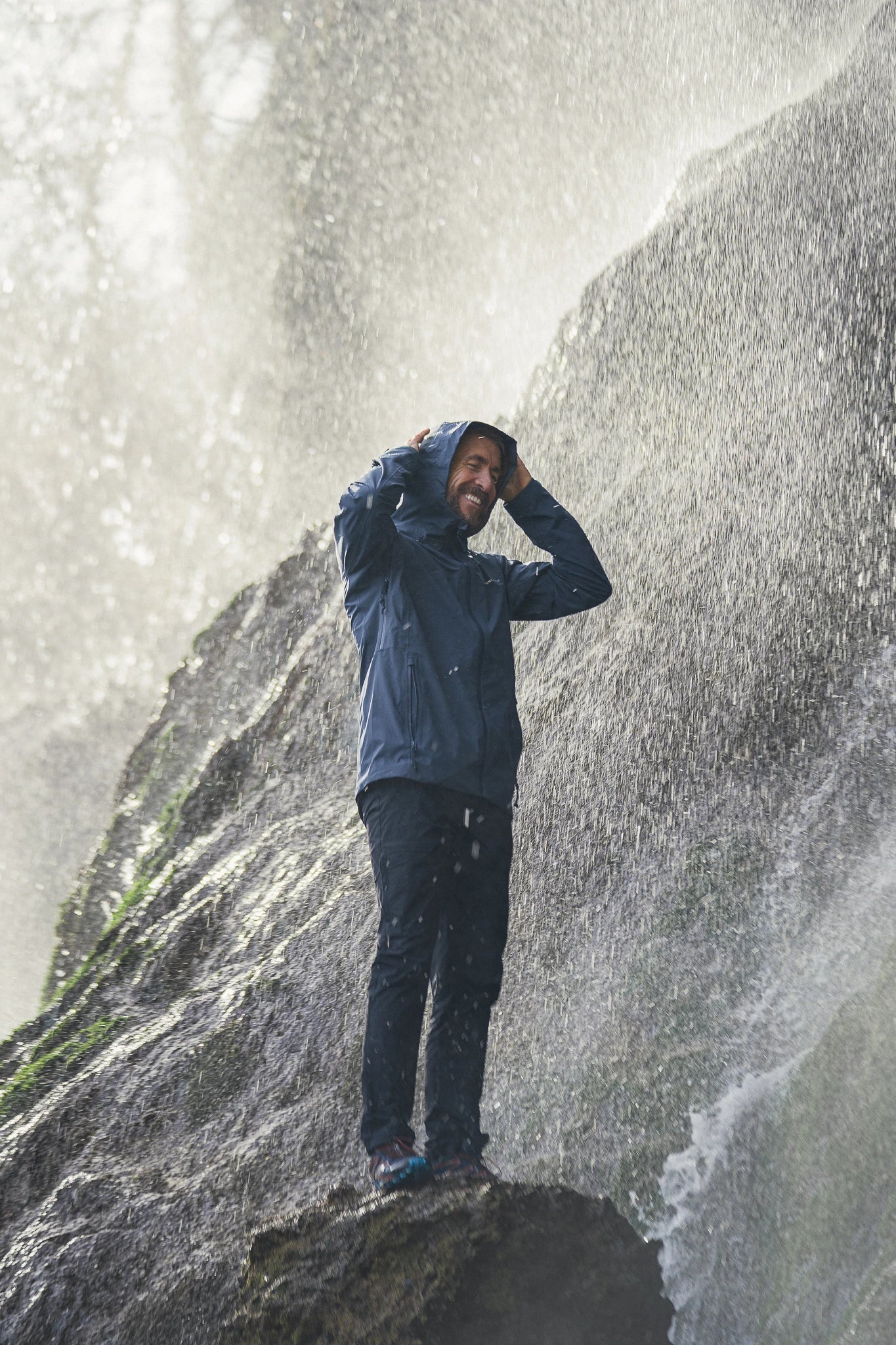


Men's Rain Jacket: Waterproof and Breathable in Any Weather
A sudden downpour can quickly dampen an outdoor excursion. But with the right gear, you'll stay dry and comfortable. A high-quality men's rain jacket that is both waterproof and breathable makes all the difference.
Choosing the right model is crucial, as the demands on such a jacket vary greatly depending on its intended use. Whether for hiking, cycling tours, or the daily commute to work, functionality is always paramount.
Many underestimate the importance of breathability in rainwear. A jacket that repels water but doesn't transport sweat outwards quickly leads to an uncomfortable, clammy feeling.
This article highlights the most important aspects to consider when choosing a men's rain jacket. It covers materials, membrane technologies, and proper care to ensure the jacket performs its function for a long time.
In Brief
- The choice of material and membrane technology influences comfort and protection.
- Water column and MVTR value are crucial metrics for performance.
-
Practical Tip
When buying a men's rain jacket, it is advisable to look for a water column of at least 10,000 mm to ensure reliable protection even in heavy rain. For extreme conditions, 20,000 mm or more is recommended.
Coatings versus Membranes: Understanding the Differences
In addition to membranes, coatings are also used to make fabrics waterproof. These are often cheaper to produce but usually offer lower breathability and durability.
A coating is a layer of polyurethane or similar polymers applied directly to the fabric. It seals the pores of the fabric to prevent water from penetrating.
The disadvantage: Breathability suffers because water vapor cannot escape as efficiently as with a microporous membrane. Coated jackets are more suitable for occasional use or less intensive activities.
Membranes are generally more durable and resistant to abrasion and frequent washing. They maintain their function over a longer period, which often justifies the higher purchase price.
How Important is the Water Column and What Does it Indicate?
The water column is a central indicator of the waterproofness of a men's rain jacket and is given in millimeters. It describes the pressure that a column of water can exert on the material before water penetrates through it.
A value of 10,000 mm, for example, means that a 10-meter column of water could stand on the material without moisture penetrating. This value is determined according to the DIN EN 343 standard and provides an objective basis for comparison.
For everyday use or light rain showers, values around 5,000 mm are often sufficient. However, for those who spend longer periods in heavy rain or carry a backpack, significantly higher water columns should be considered, as the pressure on the shoulders and back increases.
Minimum Values for Different Activities
The requirements for the water column vary greatly depending on the planned activity. A walk in the park has different demands than a multi-day trekking tour in the high mountains.
A common misconception is that a high water column alone is sufficient for a good rain jacket. In fact, breathability plays an equally important role in ensuring a comfortable body climate.
Because what good is the best waterproofness if you get wet from the inside because sweat cannot escape? This leads to an unpleasant, clammy feeling and can even lead to hypothermia in cool temperatures.
In short: The water column indicates how much water pressure a rain jacket can withstand, with higher values offering better protection in stronger rain and pressure.
Seam Sealing: The Weak Point of Many Jackets
Even the best membrane or coating is useless if the seams are not waterproof. Water can easily penetrate here and impair the function of the jacket.
Therefore, it is essential that all seams of a waterproof and breathable men's rain jacket are sealed with special tapes. These tapes are applied to the seams under heat and form an impermeable barrier.
When purchasing, one should pay close attention to whether the product description explicitly mentions "fully taped seams" or "welded seams". Partially taped seams are a compromise that ensures waterproofing at critical points but does not provide comprehensive protection.
A simple test: if you hold a jacket up to the light, you should not see any light spots at the seams. This would be an indication of insufficient sealing, which will become a problem in the rain.
Why Breathability is Indispensable for Rain Jackets
Many people primarily think of waterproofness when it comes to a men's rain jacket. But breathability is just as important to maintain a comfortable body climate and avoid overheating or cooling down.
Imagine hiking up a steep mountain. Your body produces sweat to cool itself down. If this sweat in the form of water vapor cannot escape through the jacket, it condenses on the inside and you get wet from within.
This phenomenon is also known as the "sauna effect" and leads to a clammy and uncomfortable feeling. In cooler temperatures, this can even lead to hypothermia, as damp clothing conducts body heat away faster.
Breathability is often indicated by the MVTR value (Moisture Vapor Transmission Rate) or the RET value (Resistance to Evaporative Heat Transfer). A high MVTR value or a low RET value signals good breathability.
Also read: The right jacket for miserable weather
MVTR and RET: Key Figures for Comfort
The MVTR value measures how much water vapor per square meter can escape through the material in 24 hours, and is given in g/m²/24h. Values above 10,000 g/m²/24h are considered good, and above 20,000 g/m²/24h as very good.
The RET value, on the other hand, measures the resistance that a material offers to water vapor. A low RET value here means high breathability. Values below 6 are considered excellent, between 6 and 13 as good.
These values are crucial for objectively assessing the performance of a waterproof and breathable men's rain jacket. They should definitely be taken into account when making a purchase decision, especially if you are physically active.
Which option fits?
High MVTR value (e.g., >20,000 g/m²/24h)
Ideal for intensive sports activities such as trail running or mountain biking, where a lot of sweat is produced.
Low RET value (e.g., <6)
Optimal for long hikes or trekking tours where consistently high wearing comfort is required.
Ventilation Systems: Complementing the Membrane
In addition to the membrane, many men's rain jackets improve breathability through intelligent ventilation systems. These are often zippers under the armpits, known as pit zips, which can be opened when needed.
These zippers allow direct air exchange and help to quickly wick away excess heat and moisture. They are a valuable addition, especially during high physical exertion.
The design of the pockets can also contribute to ventilation, if they are equipped with mesh lining and serve as additional ventilation openings when zippers are open. This is a clever detail that noticeably increases wearing comfort.
Some jackets also have ventilation openings in the back area, which are protected from rain by an overlap. Such systems are particularly popular with cycling jackets as they also work when a backpack is worn.
Did you know?
The breathability of a membrane can be reduced by up to 50 percent by dirt and improper care, which significantly impairs the function of the rain jacket.
What Features Are Useful in a Rain Jacket?
In addition to waterproofness and breathability, there are other features that significantly increase the comfort and functionality of a men's rain jacket. These details often make the difference between a good and an excellent jacket.
A good example is the hood. A poorly fitting hood can restrict vision or be blown off by the wind. An ergonomically shaped, adjustable hood with a brim is invaluable here.
The pocket arrangement also plays a role. Are the pockets positioned so that they are accessible even with a backpack on? Can they be sealed waterproof? Such considerations are crucial in practical use.
Hood, Zippers, and Adjustment Options
A well-fitting hood is essential for a men's rain jacket. It should ideally be three-dimensionally adjustable to perfectly adapt to the head shape and not restrict the field of vision.
A reinforced brim provides additional protection for the face from rain. Many models also offer the option to stow the hood in the collar or remove it completely, which can be practical.
The zippers must also be waterproof. Laminated zippers or those with an additional storm flap are often used here. YKK zippers are considered particularly robust and reliable.
Adjustment options on cuffs (often with Velcro fasteners) and at the hem (with drawstrings) prevent wind and rain from entering and ensure an optimal fit of the jacket.
Pockets and Their Use
The number and positioning of pockets are not just a matter of personal taste, but also of functionality. Chest pockets are ideal for keeping important items like a phone or map handy without having to take off your backpack.
These pockets should also be waterproof to protect the contents from moisture. Some jackets also offer inside pockets that provide additional protection for sensitive electronics.
Some models feature so-called Napoleon pockets, which are accessible from the outside but lie under the front placket, making them particularly well protected from rain. This is a well-thought-out solution for valuables.
It is important to ensure that the pocket zippers are smooth-running and can be operated even with gloves. This significantly increases comfort in practical use.
Cost Overview
Basic rain jacket:
50 – 150 €
High-quality functional jacket:
150 – 400 €
Premium models:
from 400 €
As of: 2026, information without guarantee
Reflective Elements and Visibility
Especially during activities at dusk or in the dark, such as cycling or jogging, reflective elements on a men's rain jacket are an important safety feature. They increase visibility and help prevent accidents.
Reflectors should be strategically placed, for example, on the sleeves, back, and front of the jacket. A highly visible logo or reflective stripes can save lives here.
Some jackets subtly integrate reflective details into the design so that they are barely noticeable during the day but glow brightly when illuminated. This is a successful combination of aesthetics and functionality.
Especially in road traffic, good visibility in bad weather is essential. A men's waterproof and breathable rain jacket should therefore also consider this aspect to provide comprehensive protection.
Proper care for long-lasting function
A high-quality men's rain jacket is a worthwhile investment. However, to maintain its full function for many years, proper care is essential. Improper treatment can significantly impair its waterproofness and breathability.
A common mistake is washing with conventional detergents containing surfactants. These can clog the membrane and attack the water-repellent impregnation. Special functional detergents are the better choice here.
Drying and reactivating the impregnation also play an important role. Simply air-drying is often not enough to restore full performance.
Washing and Impregnating: Step by Step
Preparation
Close all zippers, fasten Velcro closures, and turn the jacket inside out. Brush off coarse dirt.
Washing
Use special detergent for functional clothing. Gentle cycle at 30 °C without spinning. Do not use fabric softener!
Drying and Impregnating
Air dry the jacket. Then apply waterproofing spray and reactivate the impregnation in the dryer (low temperature) or with an iron (low temperature, with a cloth in between).
The Durable Water Repellent (DWR) coating on the outside of the jacket ensures that water beads up. This layer wears off over time and needs to be renewed.
A simple test: If water droplets no longer bead up but penetrate the fabric, it's time for a new impregnation. This is a clear sign that the function is decreasing.
It should be ensured that impregnating agents suitable for membrane clothing are used. Fluorocarbon-based products are very effective, but there are also more environmentally friendly alternatives.
Important to know
Fabric softeners and bleaches are taboo for functional clothing. They can permanently damage the membrane and irrevocably destroy breathability and waterproofness.
Avoiding common care mistakes
A common mistake is overwashing the jacket. It should only be washed when it is truly dirty or if the impregnation is failing. Too frequent washing unnecessarily stresses the material.
Drying on the heater or in direct sunlight can also damage the material. Gentle air drying is usually the best choice, followed by targeted heat treatment to reactivate the DWR.
Storage also plays a role. A waterproof and breathable men's rain jacket should be stored dry and airy, not crumpled in a damp corner. This significantly extends its lifespan.
Regular checks for small damages such as tears or open seams are also useful. Small defects can often be easily repaired before they become bigger problems.
In short: Proper care with special detergents and regular impregnation is crucial to maintain the waterproofness and breathability of a rain jacket long-term.
Frequent Questions
Conclusion: The perfect rain jacket for every adventure
The search for the ideal men's rain jacket, which is both waterproof and breathable, requires a careful consideration of various factors. It's not just about staying dry, but also about comfort and functionality during different activities.
One should be aware that a higher water column does not automatically mean a better jacket if breathability suffers. The perfect balance between these two properties is the key to a comfortable wearing experience.
Investing in a high-quality jacket with proven membrane technologies and well-thought-out features pays off in the long run. Good care also extends the lifespan and maintains performance for many years.
Ultimately, the best rain jacket is the one that optimally meets individual needs and the intended area of use. One should not hesitate to try on different models and carefully check the specifications to make the right choice.









Share:
The ideal daypack - here's what it needs to do!
Outdoor Backpacks - What Types Are There?