



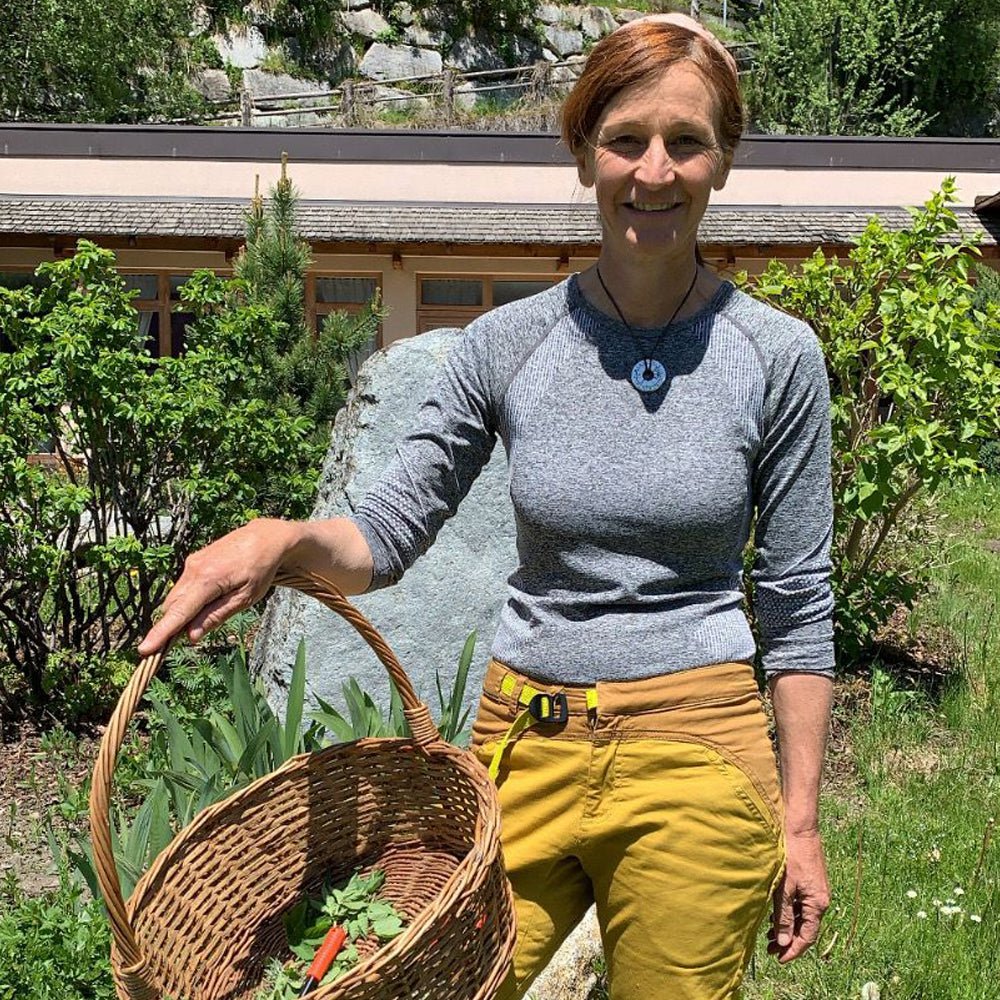
Nature blesses us with wonderful herbs, and while they have a healing effect on many physical ailments, most people are not yet sufficiently familiar with them. The last decades have been characterized by humanity moving further away from nature and dedicating itself to highly industrial foods and medicines. Slowly, however, a shift is being observed – numerous people are realizing that the origin lies in nature and that by integrating these valuable medicinal herbs, we can achieve an extraordinarily good effect on our health. If you are looking for the best wild herbs for your diet and well-being, you will enjoy this article.
Wild Herb Walk – What Should Be Prepared?
Anyone embarking on a tour through beautiful nature to collect wild herbs should make a few preparations. First and foremost, it is advisable to bring a basket to put your collected wild herbs in. To identify the wild herbs, you should read this guide beforehand or participate in a herb walk. A piece of horn or strong branches are suitable for digging out roots – it is advisable to avoid metal coming into contact with the wild herbs. All other important information about the individual healing herbs can be found in the following section. Let's go to nature's most beautiful herb garden in the mountains.
Strawberry Leaves

Everyone knows the green leaves of wild strawberries. However, not only the fruits are edible for humans; the green leaves also serve as a perfect side dish in a wild herb salad or as tea. They can be recognized by their rounded (ovate) leaf shape. They are long-stemmed and tripartite. Their edges are serrated.
Effect on the body:
- Anti-inflammatory
- Antioxidant
- Astringent
- Help with diarrhea, stomach and intestinal problems, and mucous membrane inflammation in the mouth and throat
Raspberry Leaves

Similar to strawberry leaves, the leaves of the wild raspberry bush have beneficial effects on the human organism. They are a real treat for the taste buds and therefore fit into a mountain herbal tea as well as a salad of mixed wild herbs. Many wild herb recipes can be found online. The leaves can be recognized by their light green color. They are also three to seven-part pinnate. A white down can be seen on the underside. The bushes are tall and grow mainly along hedges, roadsides, or at the edge of a forest. In this case, wild herbs can also be collected in the garden – if you have raspberry bushes there.
Effect:
- Anti-inflammatory
- Antipyretic (fever-reducing)
- Labor-inducing
- Calming
They are good for:
- Skin inflammations
- Diarrhea
- Abdominal pain
- Eczema
- Lichens
Yarrow

The wonderful yarrow leaf is called the eyebrow of Venus. It is a great ingredient in tea, soup, or salad. It contains many bitter substances, which are particularly important for liver health. Yarrow is blessed with fine, delicate leaves. These are either brown or greenish. The growth height of the plant is between 60 and 100 cm – meaning it can grow very tall.
It has a very calming effect. It can also be used well for wound healing, abdominal pain, or bloating.
Effect:
- Anti-inflammatory
- Promotes bile flow
- Can lower blood pressure
- Helps with menstrual problems
- Alleviates fever
Orpine (Sedum telephium)

If you're out and about and have nothing to drink, you should look for Orpine. This medicinal herb is very watery and tastes like peas. The plant serves as a perfect thirst quencher that nature provides for you. The leaves are fleshy, and the flowers can be yellow, red, or white.
Areas of application:
- Wound healing for bruises, swellings, warts
- Can help with respiratory diseases
- Can also be used for corns
- Can alleviate the symptoms of rheumatism, gout
- Blood purifying
Sorrel
The acid contained in sorrel serves as a perfect thirst quencher. Since the plant is full of oxalic acid, too large quantities should not be eaten – but we are talking about really large quantities here, which could be irritating to the kidneys (up to 10 leaves are not a problem).
Can be used for:
- Anemia
- Itching
- Gastrointestinal complaints
You can recognize the leaves by their elongated, smooth shape. Depending on how much oxalic acid they contain, they are dark green to red.
It serves as a delicious ingredient in wild herb salad or processed into herb butter.
Broadleaf Plantain/Ribwort Plantain

Broadleaf plantain grows exactly where people walk. It has oval to round leaves that grow like a rosette from the ground. The leaves are perfect in a delicious salad, but broadleaf plantain is also optimally suited for external use. In the form of a tincture, it can relieve pain and reduce swelling.
It can be used for:
- Cough
- Inflammation in the mouth
- Skin wounds
It has expectorant, pain-relieving, and anti-inflammatory effects.
Ribwort plantain can be recognized by its elongated leaves. It is perfect for use as an ingredient in salads or smoothies. It can also be used for coughs. It contains mucilage that can be applied to insect bites. In addition, it can be used for wounds.
Polypody/Angelica

This medicinal herb grows particularly on walls and reaches up to 50 cm in height. It has dots on the underside of its leaves, hence the name. The root is particularly popular among athletes.
The effect:
- Bile-promoting and deworming
- Good effects on liver health
- Is good for constipation
- Can kill intestinal parasites
The root of the plant tastes much sweeter than sugar and resembles licorice in taste. The sweetness can be extracted by cutting the root and then mixing it with milk or water. It can be used as a healthy sugar substitute.
Male Fern

You can recognize this plant by its long fronds, which can be up to a meter tall. They are bipinnate and have blunt, weakly toothed pinnules.
It is mainly used externally. The fresh leaves are stuffed into a pillowcase and placed in the oven. There, everything is gently heated, after which it can be applied to joint pain. This can be repeated several times.
It can be used for:
- Gout
- Foot care
- Abrasions/injuries
Tears of the Trees, Tree Resin

Resin is formed by trees to protect themselves. Humans can also use it. Processed into an ointment, the resin can have an anti-inflammatory function. It is also used for blisters, purulent wounds, and wood splinters in the skin. In addition, it serves as a local incense for removing bad energies in houses and apartments – it is also known as the frankincense of the Alps. The resin forms directly on the tree trunks. Anneres emphasizes in her explanations that the resin should only be taken from those places where the tree has produced enough. You can find much more information in Anneres' video.
Blueberry Leaves

When blueberries bloom, the doctor can go on vacation – that's an old saying from the South Tyrolean Alpine region. This plant contains a substance called myrtillin. This substance can be used especially by diabetics, as it is particularly beneficial for them. The leaves should be collected before flowering, as the substance is only present then. The leaves taste particularly delicious in smoothies.
Spruce Shoots

Spruce shoots, which grow in spring, can be mixed with honey to make an ideal cough syrup. In addition, caramel can be conjured from them. If you want to achieve special effects, you can also process them into a tincture, which can particularly help with back or muscle pain. They also help to open the airways – for example, in the sauna.
What is your favorite wild herb? Have you ever gone into a meadow or forest to collect one of the wild herbs mentioned above?
If you want to delve deeper into the topic, you should visit Anneres: https://www.heilkunstdernatur.com/




















Share:
Timmelsjoch – Imposing Mountain Pass Between Austria and Italy
Stettiner Hütte – Reconstruction After Avalanche Disaster
4 comments
Dankeschön 🙏wunderbarer gereichender Bericht
Wieder etwas Neues über Heilkräuter erfahren
Herzlichen Dank für das tolle Video.
Superschöner und sehr informativer blog! Dankeschön 👏🏻