



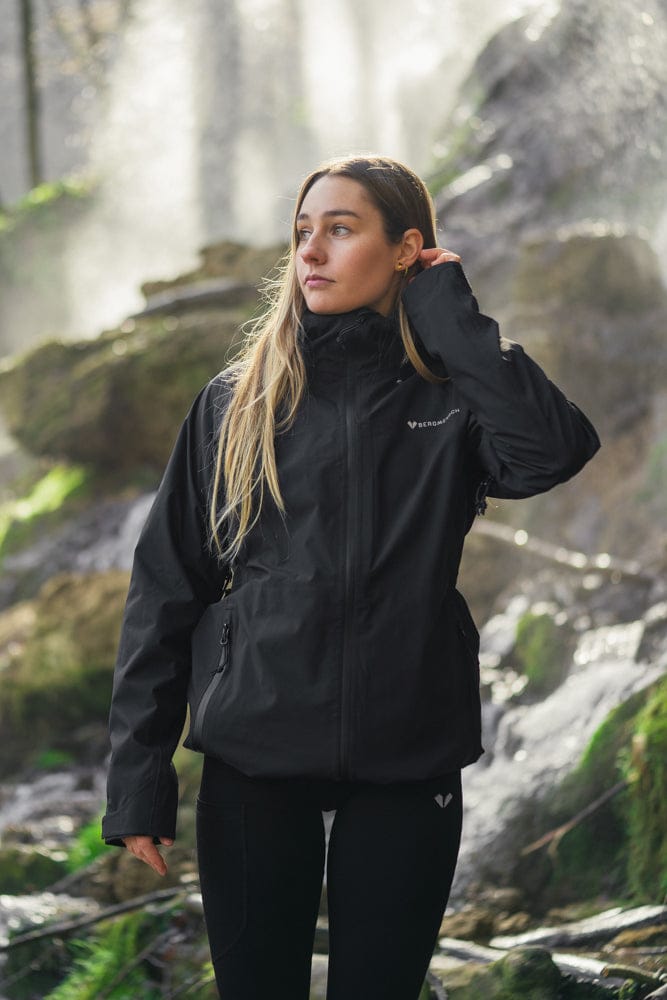
Are you looking for a breathable rain jacket but not sure what to look for? It's not that easy, as there's a lot to consider. You don't want to be soaked in sweat after a short time just because the jacket isn't working properly. In this article, we'll take a closer look at what makes a good rain jacket, so you're well-equipped for your next adventure and stay dry – no matter what the weather does.
Key insights for choosing the right jacket
-
When choosing a breathable rain jacket, pay attention to the water column and good seam sealing to ensure it really keeps you dry.
-
Membranes and special coatings are crucial for breathability; they let sweat out but keep water from getting in.
-
Ventilation openings, especially under the arms, help to quickly release excess heat and moisture.
-
The right fit is important so that the jacket sits well, allows you freedom of movement, and prevents water from entering.
-
Regular care and refreshing the impregnation (DWR) are necessary for your rain jacket to remain functional and breathable for a long time.

What to look for in a breathable rain jacket?
If you're looking for a rain jacket that keeps you dry but also lets air reach your skin, there are a few things to consider. It's about finding the right compromise so you can be active outdoors in the rain without feeling like you're in a sauna. Modern jackets do this well, but you need to know what to look for.
The importance of membranes and coatings
Membranes and coatings are the heart of a breathable rain jacket. They are responsible for preventing water from penetrating from the outside while allowing sweat to escape from the inside. Imagine it like a tiny sieve that blocks large raindrops but lets small water vapor molecules pass through. There are different types, but the basic principle is the same: keeping you dry, whether from the outside or the inside.
Water column and seam sealing for optimal protection
The water column indicates how much water pressure can be withstood before it penetrates the material. For normal rain, values around 10,000 mm are often sufficient. For really heavy rain or if you're standing in the wet for a longer period, 20,000 mm or more is a good choice. However, even the best material is useless if the seams are not watertight. That's why sealed seams, often taped from the inside with a special band, are so important. They prevent water from entering where the material has been sewn together. Good seam sealing is a sign of quality and truly keeps you dry.
The role of ventilation openings
Sometimes the breathability of the membrane alone is not enough, especially when you are exerting yourself heavily. This is where ventilation openings come into play. These are often zippers under the arms or on the sides that you can open to let in additional air. This helps to quickly dissipate excess heat and moisture. So, if you do a lot of sports or sweat easily, look for such features. They make a big difference in maintaining a comfortable body climate even during strenuous activity.
Materials and their properties for your rain jacket
Understanding breathability: Water vapor permeability
A rain jacket's ability to transport moisture from the inside out is crucial for comfort. This is often referred to as water vapor permeability. It indicates how well the material allows water vapor to escape. High water vapor permeability means that sweat and body heat can escape, promoting a dry feeling on the skin. This is especially important during physically demanding activities where you quickly start to sweat. The values for this are often given in grams per square meter per 24 hours (g/m²/24h). The higher this value, the more breathable the material.
Waterproofness: More than just water-repellent
Waterproofness is the core function of a rain jacket. It is measured by the water column, which indicates how much water pressure the material can withstand before becoming saturated. A value of at least 10,000 mm is recommended for good protection in the rain, while outdoor professionals often prefer jackets with 20,000 mm or more. But it's not just the material itself that counts, but also the workmanship. Welded or taped seams are essential to prevent water from penetrating at the joins. Without this sealing, even the best membrane is of little use.
Lightweight and functional fabrics
The outer material of a rain jacket significantly influences its robustness and durability. There are soft, thin fabrics that feel almost like textiles but are less abrasion-resistant. These are often made of polyester. In addition, there are more robust materials, mostly made of polyamide or nylon, which can withstand harsher conditions. The thread count also plays a role in durability. When buying online, it's worth checking the product descriptions for information on material properties and suitability for backpacks. If you have the opportunity, you can touch different jackets in a store to get a feel for their robustness.
Features that make the difference

1. The perfect hood: Protection and visibility
A good hood is worth its weight in gold, especially when the weather changes. It not only protects against rain and wind but should also not obstruct your vision. Make sure the hood is easily adjustable so it stays put even in strong winds. A wide brim can help prevent rainwater from running directly into your eyes. If the jacket is intended for mountaineering, a helmet-compatible hood is a must. Some jackets also have removable hoods, which can be practical for everyday use.
2. Underarm ventilation for effective moisture transport
Even the best membrane eventually reaches its limits when it comes to wicking sweat outwards. This is where underarm ventilation comes in. Zippers under the arms allow excess heat and moisture to escape quickly. This is a real relief, especially during strenuous activities or if you sweat easily. It's important that the zippers are well-made and don't press uncomfortably.
3. The importance of seam sealing
In a good rain jacket, all seams are sealed on the inside. This means that the seams are taped with a special adhesive tape. Without this sealing, water would penetrate the seams and the jacket would no longer be waterproof. Pay attention to clean and high-quality sealing. Thin tapes can even improve breathability. Some manufacturers also use laser technology to bond seams, which ensures a particularly tight and durable connection.
The right fit and its influence

A well-fitting rain jacket is essential to staying dry and comfortable outdoors. But what exactly does the right fit mean? It means that the jacket is neither too tight nor too loose. It should allow you full freedom of movement without water easily getting in. This is a fine line, but with a few tips, you can find the perfect balance.
Ensuring freedom of movement
If you move a lot, whether hiking, climbing, or just strolling, your jacket needs to keep up. Make sure you can extend your arms forward easily, for example, to use trekking poles. Nothing should pull or strain in the shoulder area either. Some jackets have pre-shaped elbows or stretchy inserts for this, which is really practical. A jacket that restricts you will only annoy you in the long run and unnecessarily limit you.
Protection against water ingress
A jacket that is too loose can cause rainwater to easily penetrate at the edges, for example at the collar or cuffs. Even if the jacket itself is waterproof, it's of little use if the water still finds its way inside. Therefore, a jacket that fits close to the body but is not too tight is ideal. Adjustable cuffs and a well-fitting hood also help to protect you from wind and weather.
Comfort in every activity
Ultimately, the jacket needs to feel good. This means it's not only functional but also comfortable. Consider what you want to wear underneath. If you often wear multiple layers, you'll need more space accordingly. A good fit therefore combines functionality with wearing comfort. It's worth trying on different models and taking your time to find the jacket in which you feel comfortable. Because only then will it become a loyal companion for all your adventures.
Care and impregnation for longevity
Regular washing maintains function
Regular washing is important for the rain jacket to retain its function. Even if there are no visible stains, sweat or sunscreen can impair breathability and water-repellent properties. Functional detergents from specialist retailers are ideal, but normal liquid detergent usually works too. Less is more: pay attention to the correct amount of detergent. Wash the jacket on a gentle cycle at 40 degrees, preferably without spinning. Fabric softeners and fragrances should be avoided, as they attack the membrane and harm the environment. After washing, let the jacket air dry, do not put it in the dryer or on the heater.
The importance of DWR treatment
The DWR (Durable Water Repellency) finish is on the outside of the fabric and causes water to bead off. It is not the same as the membrane, which is responsible for waterproofing. If water no longer beads off and the fabric gets wet, breathability suffers. A well-impregnated jacket does not feel wet even in cold weather, which increases comfort. The DWR can wear off after a few washes. Sometimes it's enough to briefly put the jacket in the dryer to reactivate the impregnation. However, after the third or fourth wash at the latest, the impregnation should be renewed.
Tips for refreshing the impregnation
If water no longer beads off the jacket well, it's time to refresh the impregnation. There are various sprays or detergents for this, for example from Nikwax or Grangers. These products can either be washed in the washing machine or sprayed onto the dry jacket. After application, it is often advisable to briefly put the jacket in the dryer or treat it with an iron (at a low temperature and without steam) to activate the impregnation. This keeps the jacket waterproof and breathable for a long time.
Proper care ensures that your rain jacket not only keeps you dry but also breathes well. That makes the difference between a pleasant day out and an unpleasant experience in bad weather.
Special requirements for your breathable rain jacket
Sometimes it takes more than just a standard rain jacket. Depending on what you're planning, there are a few things you should pay particular attention to. This makes the difference between feeling comfortable during your activities or getting annoyed.
Lightweight for on the go
If you're often on the go and value light luggage, a lightweight rain jacket is worth its weight in gold. These jackets are often made from thinner, yet robust materials. They can be packed up super small and fit into almost any bag. This is practical if you spontaneously encounter a shower or only take the jacket with you for emergencies. Pay attention to pack size and weight so that it doesn't burden you unnecessarily.
Helmet-compatible hoods for mountaineering
For anyone who enjoys being in the mountains, a helmet-compatible hood is a must. These hoods are cut in such a way that they fit well over a climbing or cycling helmet without restricting vision. A good adjustment option ensures that the hood stays securely in place even in wind and weather. This is important so that you can fully concentrate on the path and are not distracted by a flapping hood.
Functional clothing layers underneath
The best rain jacket is of little use if the clothing underneath can't keep up. Cotton is a real enemy here, as it absorbs moisture and does not release it. This means you get wet from the inside, even if the jacket keeps you dry from the outside. Instead, opt for functional materials that wick sweat away from the body. This way, the moisture can actually escape to the outside and you stay pleasantly dry. The interaction of the layers is crucial for comfort, especially on strenuous tours.
Conclusion: Finding the right rain jacket for you
So, if you're looking for a rain jacket that won't let you down, pay attention to the details. A good hood that doesn't get in the way but protects is worth its weight in gold. And if you're on the go a lot or sweat easily, ventilation openings under the arms are really practical. Remember that the seams also need to be well-made so that no water gets through. Gore-Tex Active is super light and breathable, perfect for sports.
But no matter what you need the jacket for, the most important thing is that it keeps you dry without making you feel like you're in a sauna. With a few checks, you're sure to find the perfect jacket for your adventures.







Share:
Which rain jacket for cycling?
Which rain jacket for nasty weather?