



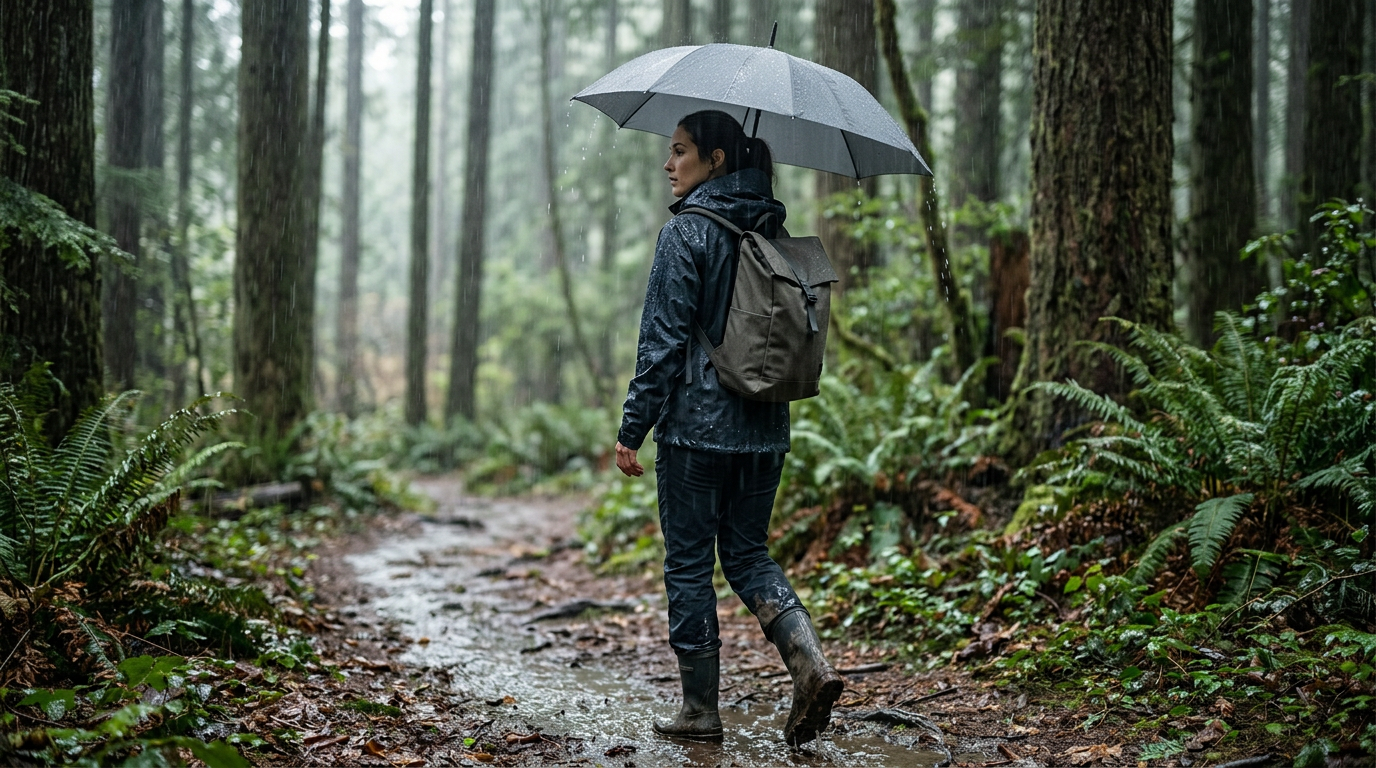


Which jacket for continuous rain?
⏱ Reading time: approx. 9 min.
A sudden downpour can quickly spoil any outdoor excursion. But with the right equipment, even a persistent shower can be enjoyed. A suitable rain jacket is the key. The selection of models and technologies is huge, which often makes the decision difficult. From breathable membranes to robust coatings - each variant has its peculiarities.
This guide will help you find the ideal jacket for continuous rain. You'll learn about the most important material properties and discover which factors really matter when buying. A jacket for continuous rain reliably protects you from wetness and wind by using waterproof materials and special constructions that prevent moisture from entering and at the same time allow breathability.
Brief summary
- Waterproof membranes like GORE-TEX or Sympatex offer excellent protection.
- A water column of at least 10,000 mm is recommended for continuous rain.
- Pay attention to sealed seams and water-repellent zippers.
- Breathability is important to prevent moisture buildup inside.
Which materials are really waterproof?
Imagine you're in the middle of the mountains, the sky opens up, and it's pouring rain. Your jacket absolutely has to be reliable now, otherwise the day is ruined. Here, the right materials and their processing are paramount.
There's a wide selection of fabrics designed to protect you from rain. But not every material lives up to its promise. For true continuous rain protection, membranes that repel water and at the same time allow water vapor to escape are crucial.
Understanding membrane technologies
Modern rain jackets rely on highly developed membranes. These thin layers, often made of polytetrafluoroethylene (PTFE) or polyurethane (PU), are the core of every waterproof jacket. They have microscopically small pores that keep water droplets out, but allow sweat molecules to pass through to the outside.
A well-known example is GORE-TEX, a PTFE membrane that is valued for its high waterproofness and breathability. Another option is Sympatex, a non-porous polyester membrane that wicks away moisture through physical and chemical processes. Both systems offer reliable protection, but differ in their functionality.
Coatings and limitations
In addition to membranes, there are also coatings, mostly polyurethane-based, which are applied directly to the textile. These are often cheaper, but generally less breathable and less durable than membranes. A coating may be sufficient for light rain, but quickly reaches its limits in heavy continuous rain. The water column is often lower here, and the coating can peel off over time.
How important is the water column really?
You often read about water columns, but what does this value actually mean for your jacket? A high water column promises a lot, but practice shows that it's about more than just this one number.
The water column is a crucial indicator of a material's waterproofness. It is specified in millimeters and describes the pressure that a water column can exert on the fabric before water penetrates. For a jacket that is truly meant to be waterproof in continuous rain, a value of at least 10,000 mm is recommended.
DIN standards and practical significance
The water column is measured according to the European standard DIN EN 343. This standard classifies protective clothing against rain. A value of 1,300 mm is already considered waterproof, but this is not sufficient for a longer stay in heavy rain. A jacket with a 20,000 mm water column, for example, offers significantly better protection under extreme conditions, such as when carrying a heavy backpack that puts additional pressure on the material.
What many don't know: Not only the material itself, but also the processing of the seams influences the actual waterproofness. Even the best membrane is of little use if the seams are not waterproof sealed or welded. This is where the wheat is separated from the chaff, because water most often penetrates through unsealed seams.
Practical Tip
When buying, always check whether the jacket's seams are fully sealed. A look inside the jacket will tell you if an additional layer has been applied over the seams. This is a must for reliable rain protection.
Which features are indispensable in heavy rain?
A jacket can have the best membrane and a high water column, but if the details are not right, water will still penetrate. It's the little things that make the difference.
Besides the material, it's the features that really make a rain jacket suitable for heavy rain. These include elements such as a hood, zippers, and adjustment options that complete the "rain jacket" system and keep you dry.
Hood, zippers, and adjustment options
A well-fitting hood is essential. It should be adjustable to not restrict your field of vision while optimally protecting your head and face. Many high-quality models offer a triple-adjustable hood that can be precisely fitted. A reinforced hood brim is also an advantage, as it effectively drains water.
The zippers must also be waterproof, often protected by a special coating or a storm flap. Look for laminated or YKK AquaGuard zippers, which offer high protection. Adjustable cuffs with Velcro and a drawstring at the hem prevent water from entering from below or wind from getting under the jacket. This is particularly important if you move around a lot.
Pockets and ventilation systems
Practical pockets, which can also be closed waterproof, protect your valuables from moisture. Many jackets have internal pockets or chest pockets that offer additional protection. A ventilation system, for example, through underarm zippers, is a big plus for breathable jackets. It helps to regulate temperature and reduce moisture buildup inside, especially during strenuous activities.
Which option fits?
Minimalist – Short description
For short showers and moderate activities, where low weight is a priority.
All-rounder – Short description
Ideal for hiking and everyday use in changeable weather, offers a good compromise between protection and comfort.
Hardcore protection – Short description
For extreme conditions, high-altitude tours and expeditions, where absolute waterproofness is a priority.
Breathability
Why it matters for rain jackets It's a common misconception that a waterproof jacket cannot be breathable. But modern technologies prove otherwise. A jacket that protects you from rain but leaves you soaking in your own sweat is not a good long-term solution.
Breathability is essential for rain jackets to ensure a comfortable body climate. It prevents sweat from collecting inside the jacket and you from getting wet from the inside. High breathability is achieved through special membranes or ventilation systems that transport water vapor to the outside.
Mvtr value and RET value
Breathability is often indicated by the MVTR value (Moisture Vapor Transmission Rate) or the RET value (Resistance to Evaporative Heat Transfer). A high MVTR value (e.g., 20,000 g/m²/24h) means that a lot of water vapor can escape through the material, which is important for high activity. A low RET value (e.g., below 6) also indicates good breathability. The lower the RET value, the lower the material's resistance to water vapor transport.
A myth says that a jacket can be either waterproof or breathable, but not both. The reality is that modern 2.5-layer and 3-layer membranes perfectly combine both. They offer an optimal balance between protection from external influences and the transport of moisture away from the body. This is a decisive advance in outdoor apparel technology.
Myth vs. Fact
Myth
Waterproof jackets are always stuffy and uncomfortable.
Fact
Modern membranes offer high breathability by wicking water vapor outwards while repelling water droplets.
Care and impregnation
How to keep your jacket permanently waterproof A high-quality rain jacket is an investment. But even the best jacket loses its protective properties if it is not properly cared for. Regular care and the right impregnation are crucial for longevity.
The care of a rain jacket is crucial to maintain its functionality for years. Improper washing or drying can damage the membrane and impair the water-repellent layer. Regular re-impregnation is also important to preserve the beading effect of the outer fabric.
Washing and drying: The right steps
Before you wash your jacket, close all zippers and empty the pockets. Use a special detergent for functional clothing that does not contain softeners or bleaches. These can clog or damage the membrane. Wash the jacket at a low temperature (often 30 °C) on a gentle cycle. After washing, it is important to rinse the jacket thoroughly to remove all detergent residues.
Drying is best done in the air or in a tumble dryer at a low temperature. The heat in the dryer can reactivate the factory impregnation (DWR coating). If the jacket no longer beads properly, re-impregnation is necessary. There are sprays or wash-in products for this purpose that renew the water-repellent layer. Fluorocarbon-based products are very effective, but there are also more environmentally friendly alternatives without PFC.
Important to know
The DWR coating (Durable Water Repellent) is the outermost layer of your jacket that ensures water beads off. It is not the membrane itself, but an additional protective layer that needs to be renewed regularly.
Frequently Asked Questions
Can a rain jacket be waterproof and breathable at the same time?
Yes, modern rain jackets can be both waterproof and breathable thanks to advanced membrane technologies. These membranes have microscopic pores that allow water vapor to escape from the inside while keeping raindrops out, thus maintaining a comfortable body climate.
What role do sealed seams play in rain jackets?
Sealed seams are crucial for rain jackets as they protect the material's weak points from water penetration. Without additional sealing or welding of the seams, water could penetrate through the needle holes, even with highly waterproof fabric.
The bottom line
The best choice for your needs The search for the perfect rain jacket is not a one-size-fits-all solution. It depends on what you need it for and what your priorities are. A jacket that is perfect for a leisurely hike in the forest might quickly reach its limits on a challenging mountain tour.
The choice of the right jacket depends heavily on your intended use. For the daily commute to work or short walks, a lighter jacket with a water column of 5,000 to 10,000 mm is often sufficient. However, if you are planning longer tours or are in regions with frequent and heavy rain, you should invest in a model with at least 20,000 mm water column and a high-quality membrane.
Also consider the fit. A jacket should offer enough freedom of movement, but not be too loose, so that no cold bridges are created. It is best to try on the jacket with the clothes you would normally wear underneath. Investing in a good rain jacket is worthwhile, because it not only protects you from wetness, but also contributes significantly to your well-being. A well-maintained jacket can accompany you for many years.
In short: The ideal rain jacket combines high waterproofing with good breathability and robust features, suited to your individual activity profile.










Share:
Why does a rain jacket lose its water-repellent properties?
The Onion Principle: Hiking in All Weathers