



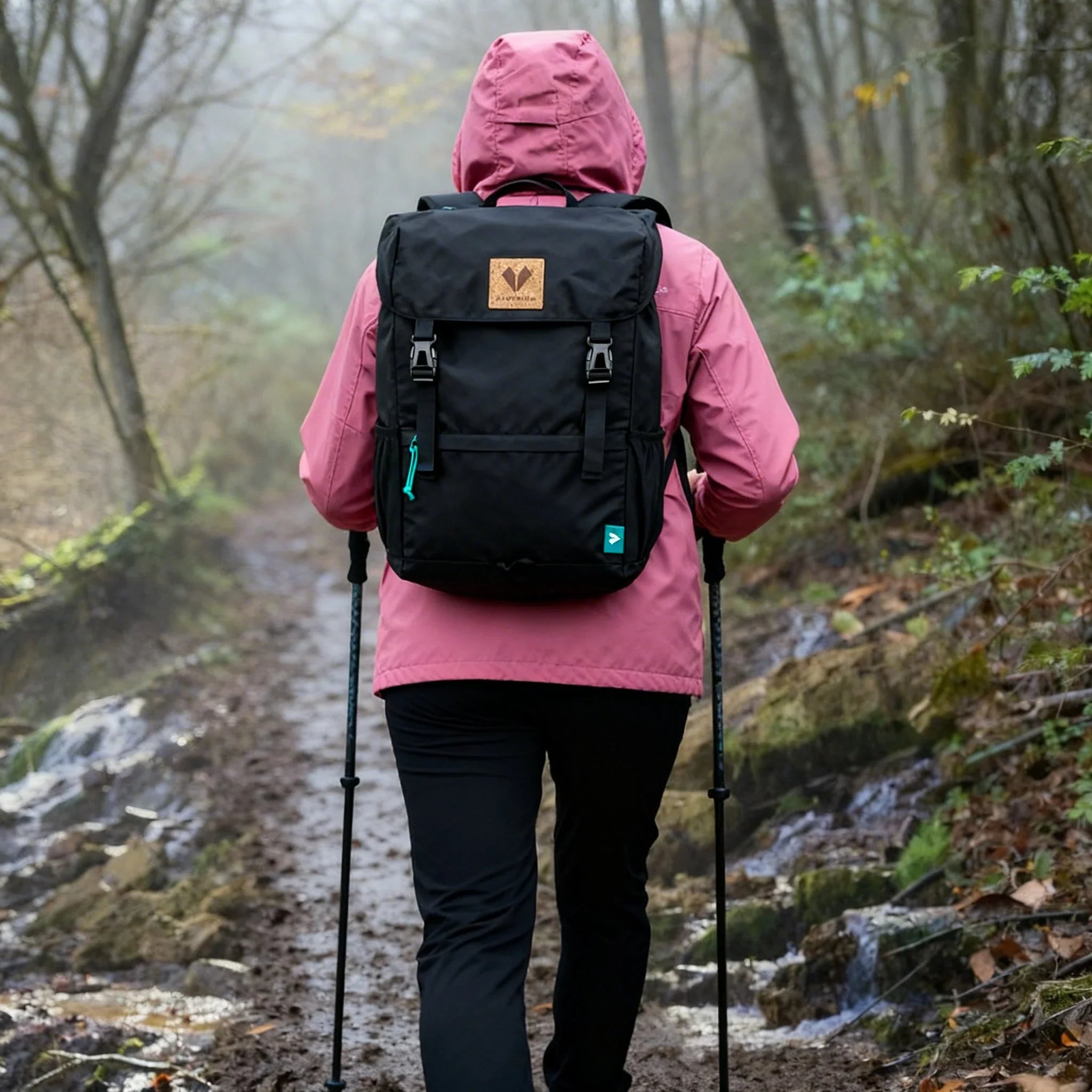
Hiking in the Rain
Rain fundamentally changes a hike. Paths become slippery, visibility becomes more diffuse, and sounds are muffled. At the same time, an atmosphere is created that is often absent in dry weather. Forests appear denser, colors more intense, and the surroundings quieter.
Hiking in the rain doesn't mean fighting the conditions. It means understanding them and adapting to them.
Why Rain is Not a Dealbreaker
Rain doesn't reduce the possibility of being outdoors. It only shifts the requirements.
Those who hike in the rain often benefit from:
-
significantly fewer people on the trails
-
a quieter, more focused environment
-
more intense perceptions of nature
-
more stable air after precipitation
The crucial difference lies not in the weather, but in the preparation.
Read also: What exactly is a windbreaker?
The Real Challenge: Moisture from Outside and Inside
Hiking in the rain presents a twofold problem:
-
wetness from outside due to rain
-
moisture from inside due to sweat
If one of these is not controlled, the body loses heat. If both are ignored, hypothermia can quickly occur.
Therefore, it's not about staying completely dry. It's about maintaining a functional balance.
Thinking About Clothing Correctly: Not Warm, but Regulating
Clothing that is too warm quickly leads to sweat during activity. Too little protection leads to chilling.
The solution lies in a clear system.
The Layering Principle
Baselayer
Sits directly on the skin and wicks moisture away. Cotton doesn't work here because it retains water.
Midlayer
Optional, depending on temperature. Retains warmth without overheating.
Rain jacket
Protects against external wetness and wind. Not only waterproofness but also breathability is crucial.
Rain Jacket: How Much Protection is Really Necessary
Not every rain jacket stays reliably waterproof. Especially on longer tours, the difference quickly becomes apparent.
Orientation by Water Column Rating
-
Below 10,000 mm: sufficient for short distances
-
10,000–15,000 mm: solid for longer hikes
-
From 15,000 mm: suitable for continuous rain and demanding conditions
Important: The water column alone is not enough. Without sealed seams or a functional membrane, water will still penetrate.
Breathability Determines Comfort
A common mistake: focusing only on waterproofness.
If moisture from inside cannot escape, a similar effect to rain occurs – but from the inside. Clothing gets wet, the body cools down.
A good rain jacket strikes a balance:
-
protects from rain
-
allows vapor to escape at the same time
Additional ventilation openings support this effect.
Lower Body and Shoes: Often Underestimated
Pants
For light rain, quick-drying hiking pants are often sufficient.
For continuous rain or dense vegetation, rain pants become useful as they significantly reduce water penetration.
Shoes
Wet paths change the ground more than expected:
-
roots become slippery
-
stones lose friction
-
mud reduces stability
Important features:
-
good tread
-
stable grip
-
controlled steps
Waterproof shoes keep rain out but can trap moisture from the inside. A functional combination of shoe and sock is crucial.
Adjust Movement Instead of Fighting
Rain doesn't require a completely different technique, but a more conscious movement.
Reduce tempo
Fast steps increase the risk of slipping. A steady, controlled rhythm is more efficient.
Change stepping technique
-
step flatter
-
keep weight central
-
avoid erratic movements
Especially on wet ground, technique determines safety.
Breaks: The Most Critical Moment
During movement, the body produces heat. During a break, this immediately drops.
Wet clothing amplifies this effect.
Strategies for Breaks
-
take short, conscious breaks
-
immediately put on an additional layer
-
choose wind-protected spots
Long breaks in the rain almost always lead to chilling.
Keep Backpack and Equipment Dry
A wet backpack quickly becomes a problem, especially if spare clothes are affected.
Important measures:
-
use a rain cover
-
pack sensitive items separately in waterproof bags
-
protect spare clothing
Dry spare clothing can be crucial if conditions worsen.
Planning Becomes More Important Than in Good Weather
Rain amplifies existing risks. Therefore, the tour should be adjusted.
Route selection
-
prefer easy paths
-
avoid exposed areas
-
plan alternatives
Monitor weather development
Rain alone is rarely critical. The combination with:
-
strong wind
-
dropping temperatures
-
poor visibility
A clear turnaround strategy is part of the planning.
Mental Perspective: Acceptance Instead of Resistance
Rain cannot be controlled. Your own reaction to it can.
Those who try to stay dry will quickly become frustrated. Those who accept that wetness is part of the situation will move more efficiently.
The focus shifts:
-
away from comfort
-
towards function
This changes the entire perception of the tour.
Typical Mistakes When Hiking in the Rain
Dressed too warmly
Leads to excessive sweating and increases internal wetness.
Insufficient protection
Cheap or unsuitable jackets fail in continuous rain.
Too fast a pace
Increases the risk of falls.
Too long breaks
Lead to rapid chilling.
No spare clothes
Becomes problematic when everything is soaked.
When It Makes Sense Not to Start
Not every weather condition is suitable for a tour.
It becomes critical with:
-
thunderstorms
-
strong storms
-
a significant drop in temperature
-
rapidly rising water levels
Here, safety clearly takes precedence over any planned route.
Conclusion: Hiking in the Rain is a Matter of Control
Rain changes the conditions, but not the possibility of being outdoors.
Those who understand how moisture, temperature, and movement interact can hike safely and efficiently even in bad weather.
The crucial point remains: Not staying dry is the goal – but staying functional.
Rain reduces comfort but sharpens focus. This is precisely where its real appeal lies.















Share:
What is a windbreaker?
What is the difference between hardshell and softshell?