



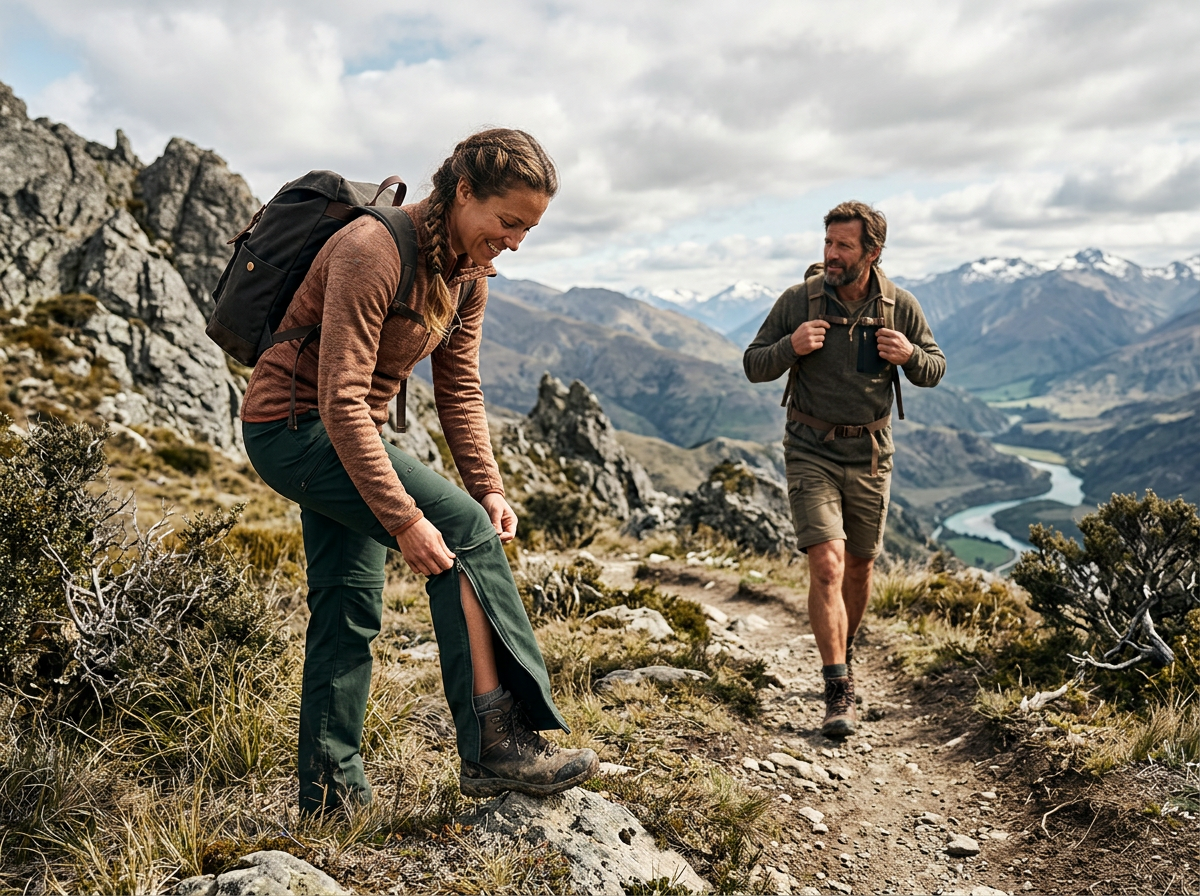


Pants with removable legs - the advantages
⏱ Reading time: approx. 16 min.
Imagine starting your hike in cool morning weather, but by midday the sun is relentlessly beating down. Who hasn't experienced this? The wrong clothing can quickly become a real burden, especially if you're out and about for a long time.
Pants with removable legs easily solve this dilemma. You no longer have to choose between long and short pants, but can flexibly adapt to the weather conditions. This saves space in your backpack and prepares you for any situation.
This article shows you why these pants are so practical and what details you should consider when buying them. We will look at the materials, functionality and versatile uses so that you are well equipped.
Pants with removable legs are a versatile garment that can quickly be transformed from long pants into shorts using zippers or buttons, offering you maximum flexibility in changing weather.
Brief summary
- Maximum flexibility in changing weather.
- Saves space in luggage due to 2-in-1 function.
- Ideal for outdoor activities and travel.
- Look for robust zippers and high-quality materials.
Which materials are suitable for flexible outdoor trousers?
For pants with removable legs, the right materials are crucial, as they determine comfort and durability. Synthetic fibers such as polyamide or polyester are mostly used here. These fabrics are light, quick-drying and extremely durable, making them ideal for demanding tours.
A typical scenario: You're in the mountains and it suddenly rains. Pants made of polyamide don't soak up water, but repel it and are dry again after a short time. This is a big advantage over cotton, which becomes heavy when wet and dries slowly.
Some models also integrate elastane components. This provides more freedom of movement, which is particularly noticeable when climbing or on steep ascents. A stretch component of 5 to 10 percent makes a huge difference here.
Polyamide: The all-rounder for long tours
Polyamide, often known as nylon, is an absolute favorite in the outdoor industry. It is extremely tear-resistant and abrasion-resistant, which significantly extends the life of the pants. It also offers good resistance to UV radiation, so the color does not fade as quickly.
The fiber structure of polyamide enables efficient moisture wicking. Sweat is transported away from the skin and evaporates on the surface, leaving a pleasant dry feeling. Many manufacturers use special weaving techniques to enhance this effect.
Another plus: polyamide is relatively easy to care for. You can usually wash the pants at 30 to 40 degrees and they air dry in a few hours. This is invaluable when traveling, where washing facilities are limited.
Polyester: Lightweight with UV protection
Polyester is another popular synthetic fiber that stands out for its low weight and high dimensional stability. Pants made of polyester hardly wrinkle and retain their fit even after many washes. This is practical if you value a well-groomed appearance.
Many polyester fabrics naturally offer good UV protection. This is particularly important in regions with intense sun exposure, where sunburn is a quick risk. Look for a UPF (Ultraviolet Protection Factor) value of 30+ or higher.
However, compared to polyamide, polyester can be slightly less breathable and feel warmer on the skin at very high temperatures. Manufacturers often counteract this with special weaving types or ventilation openings to improve wearing comfort.
How does the detachability of the pant legs work?
The functionality of the detachable legs is the core of this type of pants. Zippers are usually used here, which are strategically placed. These zippers must be robust and smooth-running so that you can quickly zip the legs on or off even when you're on the go.
A common criticism of older models was jamming zippers or those that opened under stress. Modern pants use high-quality spiral zippers, often from renowned manufacturers like YKK, which are known for their durability. These are usually concealed to avoid skin irritation.
Some pants also offer color coding on the zippers to make it easier to assign the left and right leg correctly. This sounds trivial, but it saves valuable seconds in the heat of the moment.
Practical tip
When buying, look for zippers that are not directly on the skin. A small strip of fabric behind them prevents chafing and greatly increases wearing comfort.
Zipper systems: Quality and positioning
The position of the zippers is crucial for practical use. Most models are located above the knee, turning the pants into Bermudas or shorts. A height of about 30 to 35 centimeters above the hem has proven to be effective.
There are also variants with additional zippers on the sides of the lower legs. These allow the pant legs to be removed without having to take off your shoes. This is particularly practical with hiking boots or when you need to react quickly.
The zipper teeth should be made of plastic, as metal zippers can corrode when wet and are heavier. A self-locking slider prevents the zipper from opening unintentionally. This is a small detail, but a big difference in practice.
Buttons or Velcro fasteners: Alternatives with pitfalls
Although zippers are the standard solution, there are also pants with buttons or Velcro fasteners for removing the legs. However, these are rarer and often have disadvantages. Buttons can come loose or tear off, especially with intensive movement.
Velcro fasteners offer a quick solution, but tend to lose durability over time and attract dirt. In addition, other fabrics can be damaged if they are not properly closed. Most outdoor enthusiasts therefore prefer zippers.
Some pants have a combination of zipper and snap fasteners at the bottom hem to regulate the width. This is useful for pulling the pants over hiking boots or protecting them from dirt. Such hybrid solutions often offer the best of both worlds.
What advantages do pants with removable legs offer for outdoor use?
The greatest advantages of pants with removable legs lie in their adaptability and smaller pack size. You practically have two pairs of pants in one, which is particularly important when traveling or on multi-day tours. This not only saves space, but also weight in your backpack.
Imagine you are planning a trekking tour through different climate zones. With such pants, you are well equipped for temperatures between 10 °C and 30 °C. In the morning, the long version protects against cold and insects, and at midday it transforms into airy shorts.
This flexibility also means that you have to take less clothing with you. This reduces the total weight of your luggage by an average of 500 to 800 grams, depending on the material. This is noticeably beneficial on long hikes.
Did you know?
The first trousers with detachable legs became popular in the 1980s, when the trend towards multifunctional outdoor equipment emerged.
Adaptation to weather and terrain: Always dressed appropriately
The ability to quickly switch between long and short is unbeatable. In a sudden rain shower, you put on the legs to protect yourself from moisture. If the sun comes out again, you zip them off and enjoy the fresh air on your legs.
Especially in rough terrain or in dense vegetation, the long legs offer protection against scratches, insect bites or ticks. When you then come to open terrain, you can simply store the legs and enjoy the freedom of movement of shorts.
These trousers are also ideal for river crossings. You roll up your legs or zip them off, wade through the water and then quickly have dry clothes again. This makes them an indispensable companion for adventure travel.
Space and weight saving: Less is more
If you only have to take one pair of pants instead of two, this directly affects your pack volume. Especially on backpacking trips, where every centimeter and every gram counts, this is an invaluable advantage. You have more space for other equipment or provisions.
A light pair of outdoor trousers often weighs only between 300 and 500 grams. If you had to pack a long pair and a short pair instead, that would quickly be twice as much weight. This adds up over a longer period of time to a noticeable relief.
These trousers are also perfect for the transition from city to nature. In the morning you wear them long in an urban environment, in the afternoon you zip off the legs and are ready for a spontaneous excursion into nature. This makes them a real all-rounder.
|
Advantages
|
Disadvantages
|
What should you look for when buying zip-off trousers?
When buying pants with removable legs, there are some important points you should consider to avoid bad purchases. The fit is crucial. The pants should sit comfortably, but not be too wide, so they don't flap. The length of the legs in the short state is also important.
A common mistake is to only try on the pants while standing. Sit down, squat down, do a few lunges. This is the only way to tell if the freedom of movement is really there and the zippers are not uncomfortably pressing. Good pants offer maximum flexibility.
Also pay attention to the pocket solutions. Enough storage space for your phone, keys or a small map is invaluable. Many models have zippered pockets that safely store your valuables. A thigh pocket is often very practical.
Fit and comfort: Freedom of movement is key
The ideal fit for zip-off trousers is not too tight and not too loose. Trousers that are too tight restrict blood circulation and can become uncomfortable on long tours. Trousers that are too loose can get caught or be annoying when walking.
The waistband should be elastic or adjustable to sit comfortably even after a meal or with weight changes. Some trousers have an integrated belt, which provides additional support. This is a practical detail that is often overlooked.
The seams must be cleanly finished to avoid chafing. Flat seams are the best choice here. They are less noticeable and reduce the risk of skin irritation, especially if you wear the trousers directly on your skin.
Additional features: From pockets to UV protection
In addition to the basic functions, many pants offer useful extras. Integrated UV protection, often with a UPF of 30+ or 50+, protects your skin from harmful sun radiation. This is especially important in the mountains or near water.
A water-repellent impregnation (DWR coating) allows light showers to bead off. However, this coating must be renewed regularly to maintain its effect. Make sure that the impregnation is PFC-free to protect the environment.
Ventilation openings, often with mesh inserts, ensure better air circulation on warm days. These are usually located on the thighs or in the knee area and can be opened or closed with zippers. This way you have a pleasant climate even in great heat.
Cost overview
Basic models:
40 – 80 €
Mid-range:
80 – 150 €
Premium trousers:
150 – 250 €
As of: 2026, information without guarantee
How to care for zip-off trousers correctly?
Proper care of your pants with removable legs significantly extends their lifespan and maintains their functions. Synthetic materials are robust, but they also require attention. Regular cleaning is important to remove dirt and sweat, which can attack the fibers.
A common misconception is that outdoor clothing needs to be washed particularly hot. The opposite is true! Usually, washing at 30 °C on a gentle cycle is sufficient. Too high temperatures can damage the fibers and impair the impregnation.
It is best to use a special outdoor detergent. Conventional detergents often contain fabric softeners, which negatively affect the breathability and water repellency of functional fabrics. This is a point that is often overlooked.
Washing and drying: Proceed gently
Before putting the pants in the washing machine, close all zippers and Velcro fasteners. This prevents them from getting caught or damaging other garments. Also, turn the pants inside out to protect the outside.
Definitely avoid fabric softener. It clogs the fine pores of the membranes and reduces breathability. Bleach is also taboo, as it can fade colors and weaken fibers.
After washing, air drying is the best method. Synthetic fabrics dry very quickly anyway. Direct sunlight or a tumble dryer should be avoided, as high heat can damage the fibers and change the fit. This is an important aspect for longevity.
Renewing the impregnation: Protection against moisture and dirt
The water-repellent impregnation wears off over time. If you notice that water no longer beads off, but penetrates the fabric, it's time for a re-impregnation. There are special sprays or wash-in products for this.
Before impregnation, the pants must be clean. Dirt prevents the impregnation from adhering properly. Spray impregnations are often easier to apply and more targeted to the outside. They form a thin layer that allows water to bead off.
Make sure to use a PFC-free waterproofing agent. Per- and polyfluorinated chemicals are harmful to the environment and should be avoided. Many manufacturers now offer eco-friendly alternatives. This is a small contribution to protecting our nature.
In short: Proper care of your zip-off pants, especially gentle washing and regular re-waterproofing, ensures functionality and significantly extends their lifespan.
Concluding thoughts on multifunctional outdoor pants
Pants with removable legs are far more than just a piece of clothing; they are a multifunctional companion that adapts to the whims of nature. Their versatility makes them a smart investment for anyone who enjoys being outdoors and values practical equipment. You reduce your luggage and are still prepared for all eventualities.
Choosing such pants means opting for comfort and efficiency. They allow you to handle spontaneous weather changes without constantly having to change clothes. This saves time and energy that you can better invest in your outdoor experience.
Remember that the quality of the materials and zippers is crucial. A well-made pair of pants lasts longer and brings more joy. Choose a model that suits your activities and your personal style. Then these pants will quickly become your favorite item for every adventure.
Frequently Asked Questions
Conclusion: All-rounder for every situation
Pants with removable legs are much more than just an item of clothing – they are a clever companion that offers you flexibility and comfort in every situation. Whether traveling, hiking, in everyday life, or during spontaneous weather changes, with these pants, you are always well-equipped. They combine the advantages of long pants with the lightness of shorts, making you independent of the whims of the weather.
Invest in a high-quality model that meets your needs, and you will see how versatile and practical this all-rounder is. You save space in your luggage, are prepared for any temperature, and enjoy optimal wearing comfort. Pants with removable legs are a smart choice for anyone who values functionality, adaptability, and an uncomplicated wardrobe.





Share:
Which mid-layer under hardshell?
Why does a rain jacket lose its water-repellent properties?