



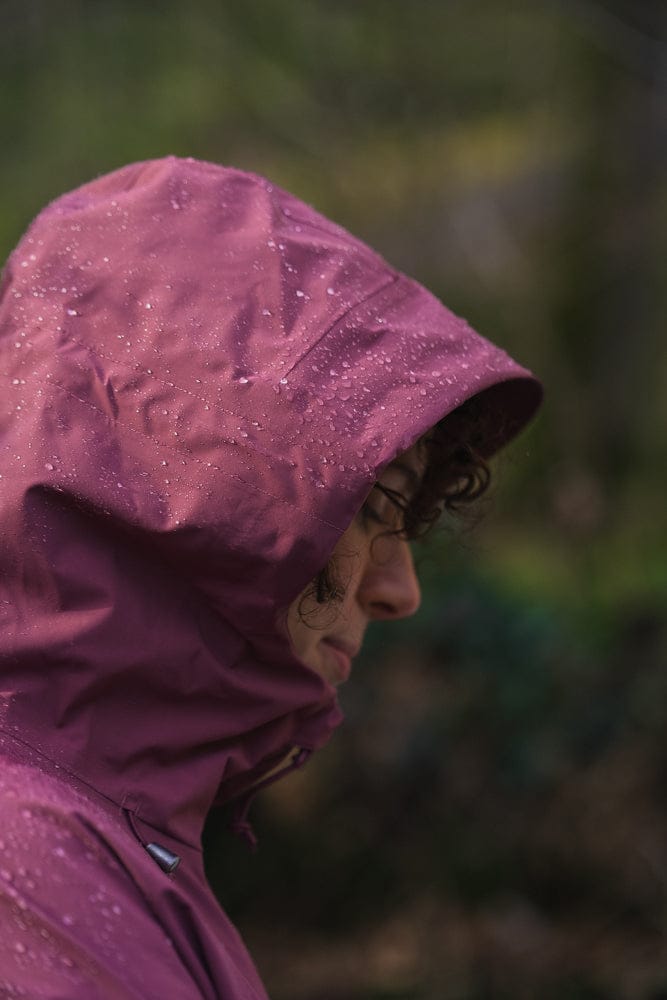


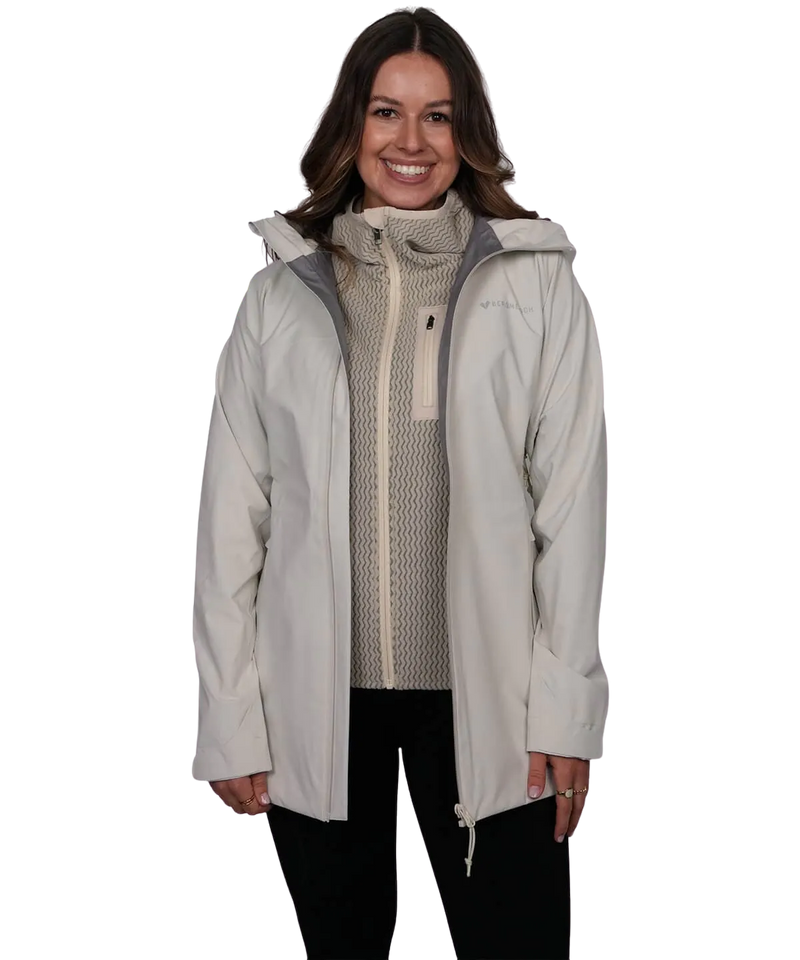
What waterproof rating should a rain jacket have? Not all rain jackets are created equal. Anyone who has spent several hours in continuous rain knows: it's not the color, not the cut, and not even the weight that matters – it's the waterproof rating.

The question "How much waterproof rating do you really need?" comes up regularly. The answer depends heavily on where and how the jacket is used. There's a world of difference between city rain and a multi-day alpine tour.
'

This article comprehensively clarifies what waterproof rating is sensible, what the specification technically means, what role breathability plays, and why construction is more important than mere numbers.
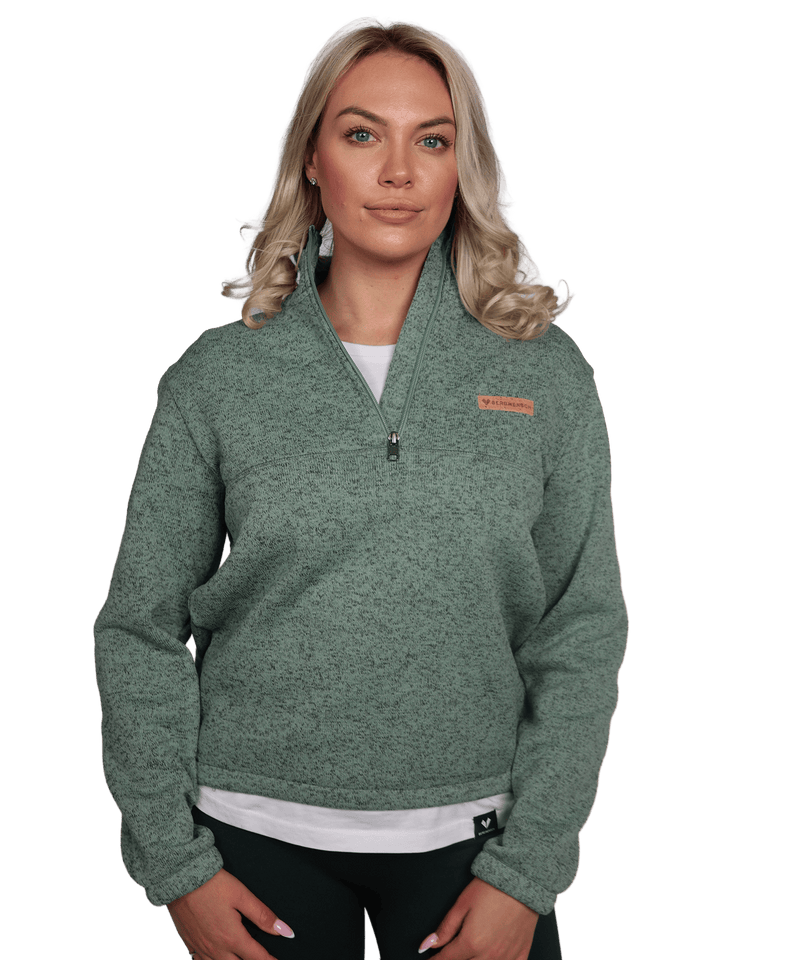
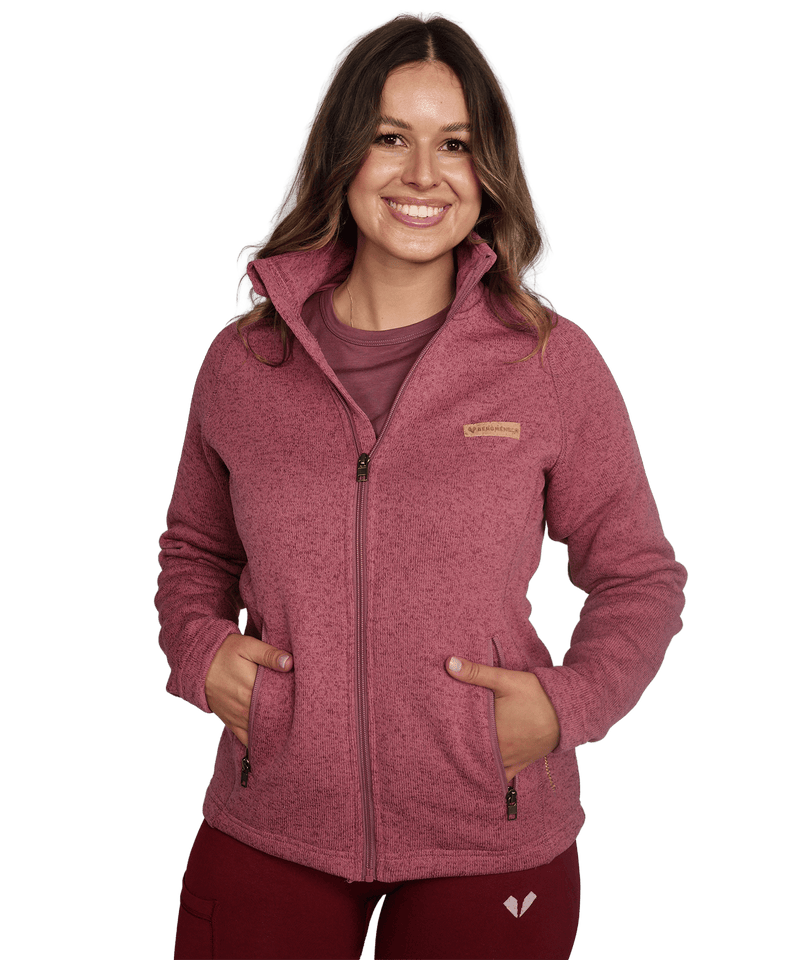
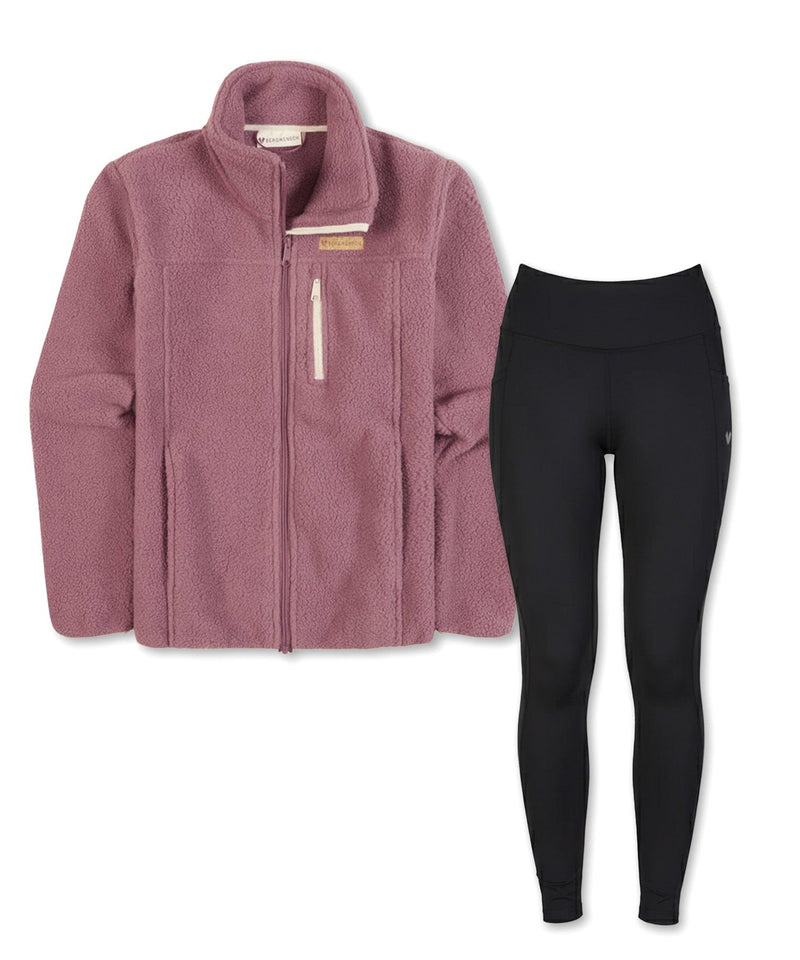
Also great as an add-on: Sherpa jackets from BERGMENSCH
What does waterproof rating even mean?
The waterproof rating is given in millimeters (mm) and describes how much water pressure a material can withstand before moisture penetrates.
Technically, it measures how high a column of water can stand on the fabric before drops push through the weave.
Example:
-
5,000 mm = can withstand a 5-meter-high column of water
-
15,000 mm = can withstand 15 meters of water pressure
According to the standard, a material is considered waterproof from 1,300 mm. In practice, however, this is hardly sufficient for serious outdoor conditions.
What waterproof rating makes sense? A realistic classification
The optimal waterproof rating depends on the intended use. Pressure is created not only by rain itself, but also by:
-
Backpack straps
-
Sitting on wet surfaces
-
Wind pressure
-
Continuous stress over hours
Everyday & Commuting: 5,000–10,000 mm
For the commute to work, short walks, or changeable city weather, this range is sufficient.
However, with longer heavy rain or additional pressure (e.g., from a backpack), this category quickly reaches its limits.
Hiking & Active Tours: 10,000–15,000 mm
This is where the range relevant for serious outdoor activities begins.
From 10,000 mm, you'll stay dry even in rain lasting several hours. 15,000 mm offers sufficient reserves for changing conditions, backpack load, and unpredictable weather.
Multi-day Tours & Alpine Conditions: 15,000 mm and more
In the mountains, additional stresses arise:
-
Strong winds with horizontal rain
-
Snowfall
-
Wet rock contact
-
Continuous rain for many hours
A waterproof rating of 15,000 mm is considered a solid standard here, offering genuine security.
Why 15,000 mm is a sensible middle ground
15,000 mm covers almost all realistic scenarios:
-
Continuous rain
-
Heavy rain
-
Backpack pressure
-
Sitting on damp surfaces
-
Wind exposure on the ridge
At the same time, the material remains breathable enough for active phases of movement. This is precisely where the balance between protection and comfort arises.
Waterproof rating alone is not enough
A high number sounds impressive. But it only tells part of the truth.
The decisive factor is the interplay of:
-
Membrane
-
Construction
-
Seam processing
-
Breathability
-
Impregnation
Without taped seams, even the best waterproof rating is of little use. Every seam is a potential weak point. Only fully sealed seams prevent water from penetrating.
3-layer construction: Why it makes all the difference
Rain jackets are available as 2-layer, 2.5-layer, or 3-layer models.
The 3-layer construction is considered the most robust solution for serious applications.
It consists of:
-
Outer material
-
Waterproof, breathable membrane
-
Inner lining to protect the membrane
The result: higher durability, better stability, and consistent performance even with intensive use.
Especially on longer tours, this construction pays off because it is less susceptible to mechanical stress.
Breathability: The often underestimated factor
What good is a completely waterproof jacket if moisture builds up underneath?
Breathability is measured in g/m²/24h. It describes how much water vapor can escape through one square meter of material within 24 hours.
Guidelines:
-
5,000 g/m²/24h: Everyday use
-
10,000 g/m²/24h: Sport activities
-
15,000+ g/m²/24h: Intensive exertion
A value around 10,000 g/m²/24h offers a very good balance for hikes, ascents, or longer outdoor days.
Additional underarm ventilation can noticeably improve the climate. Mechanical ventilation is often more effective than purely membrane-based vapor diffusion.
How much pressure really builds up?
Many underestimate how quickly water pressure builds up in everyday life.
-
Backpack straps create several thousand millimeters of pressure locally.
-
Kneeling on wet ground can reach values above 10,000 mm.
-
Strong wind increases the load additionally.
This shows why 5,000 mm is often not enough for intensive use.
Typical misunderstandings about waterproof ratings
"The higher, the better"
Not automatically. Extremely high values can be accompanied by lower breathability. The balance is crucial.
"I need 20,000 mm for a hike"
In most cases, 15,000 mm is completely sufficient. Clean workmanship and ventilation options are more important.
"Impregnation is the same as waterproofness"
False. The DWR coating ensures that water beads off. The membrane ensures that no water penetrates. Both serve different purposes.
Sustainability and weather protection are not mutually exclusive
Modern rain jackets increasingly rely on PFC-free DWR coatings (C0). These avoid problematic fluorochemicals while still offering reliable water repellency.
Especially when closely connected to nature, responsible material selection plays an increasing role.
Which waterproof rating suits which type?
Occasional user:
5,000–10,000 mm is sufficient.
Active hiker:
At least 10,000 mm, ideally 15,000 mm.
Trekking & multi-day tours:
15,000 mm offers sufficient reserve.
Alpine conditions:
15,000 mm upwards, combined with 3-layer construction and fully taped seams.
What else to look out for?
-
Fully sealed seams
-
Robust outer material
-
Effective ventilation
-
Adjustable hood
-
Hem and sleeve adjustment
-
Clean zipper covers
-
Low weight with high stability
A lightweight jacket with a stable construction offers more comfort on long tours and can be compactly stowed away.
Conclusion: The right waterproof rating is a matter of use
For serious outdoor activities, a waterproof rating of 15,000 mm has established itself as a very good standard. It offers sufficient reserves for continuous rain, pressure loads, and changing conditions, without unnecessarily restricting breathability.
Anyone who is regularly outdoors should not cut corners. Weather changes often come faster than expected – especially in the mountains.
Ultimately, it's not just the number on the label that counts, but the overall package of construction, workmanship, and functional design.
Frequently asked questions
What does the number in the waterproof rating actually mean?
Imagine a tube of water being placed on the fabric of your jacket. The number, for example 10,000 millimeters, indicates how high this column of water can be before water seeps through the fabric. The higher the number, the better the jacket seals, even if you stand in the rain for a long time or there is strong pressure on it.
Do I really need a jacket with a high waterproof rating for everyday use?
For the way to school or a quick trip to the shops, a jacket with a waterproof rating of about 5,000 millimeters is often sufficient. However, if you know that you will be outside longer, it will rain heavily, or you might even go hiking, 10,000 millimeters or more is a good choice to ensure you stay truly dry.
Why is my expensive rain jacket no longer completely waterproof after some time?
This is normal. Over time and with use, the water-repellent properties wear off. Incorrect care, such as fabric softener in the washing machine, can also damage the membrane. But don't worry, with proper care and sometimes a new impregnation, the jacket can become more waterproof again.
If a jacket is super waterproof, can it still breathe well?
It's a bit of a compromise. The tighter the material is against water from the outside, the harder it is sometimes for sweat to escape from the inside. But modern jackets, especially those with special membranes like Gore-Tex, often manage to do both well: keep water out and still breathe, so you don't get wet from the inside.
Are the waterproof ratings of different brands always comparable?
Not always completely. While there are rules for how to measure this, sometimes manufacturers test a little differently or only state minimum values. So, see the number more as a good guide. It's also important how well the jacket is made, for example, whether the seams are well sealed.
What's better: a coating or a membrane for my rain jacket?
Both have their advantages. A coating is often cheaper and makes the jacket waterproof. A membrane is usually thinner, more breathable, and often lasts longer. Many good jackets use a membrane to offer the best protection and wearing comfort, especially if you're on the go a lot.











Share:
50 Great Mother's Day Gift Ideas! (Outdoor Moms)
What is a windbreaker?